Workation
Work From Hills: how weekly and monthly stays in the mountains work
What working from the hills involves, what decides whether it works, what it costs and how booking a stay works.
Last updated 11 Oct 2026 · 13 min read
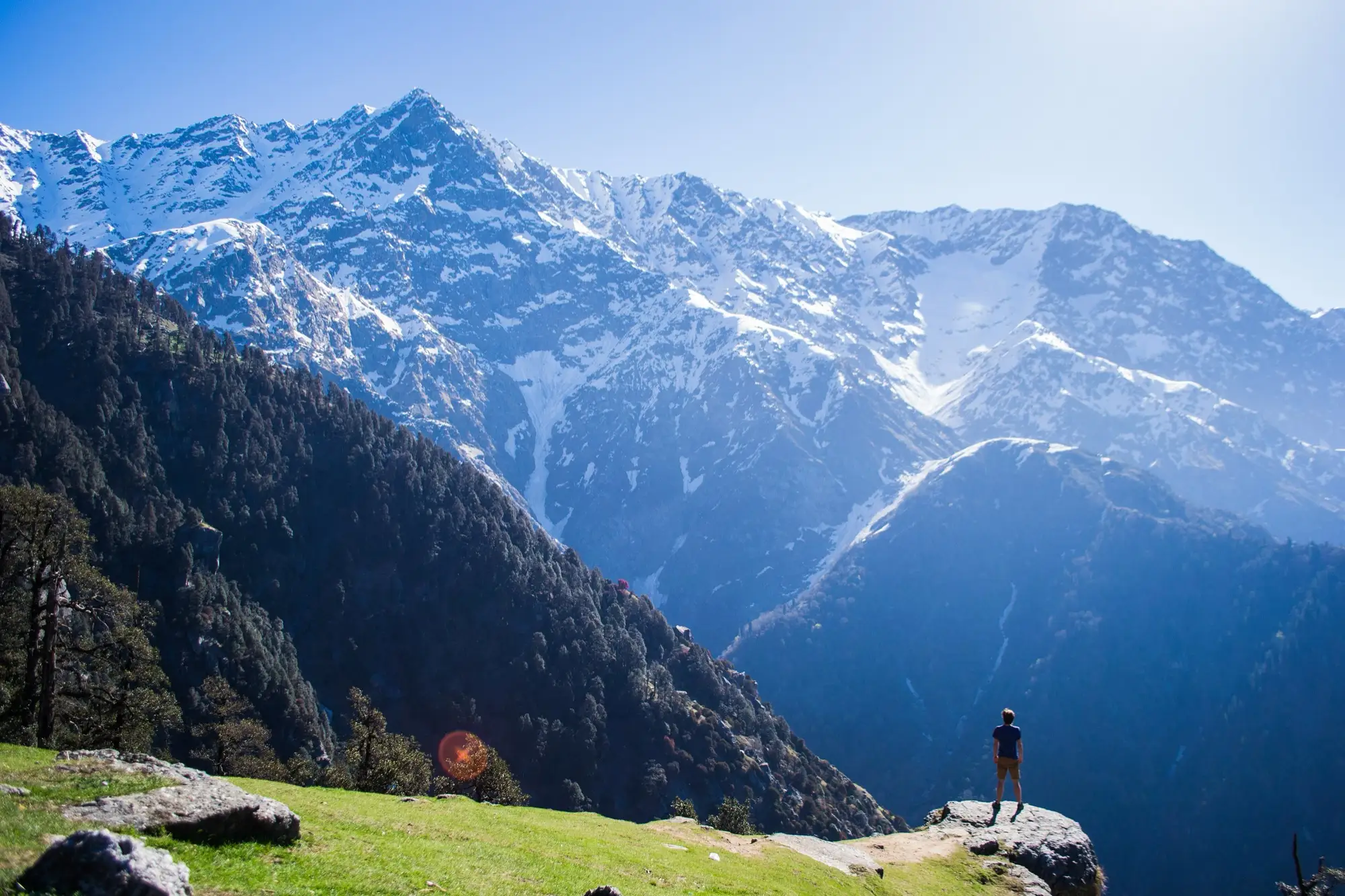
To work from hills, you take your remote job to a hill town for a week to several months and run it from a proper desk. It works when the internet (fibre or mobile data), power backup, desk, winter heating and the road in all hold up. Homes and rooms on this site cost ₹5,000 to ₹16,000 a week or ₹17,000 to ₹60,000 a month, and the shortest stay is one week.
On this page
- What does working from the hills mean in practice?
- Who should work from the hills, and who should not
- What decides whether a stay in the hills works
- How a weekly or monthly stay differs from a hotel or a holiday rental
- What a month in the hills costs
- Monthly rents in hill towns compared
- How booking with Work From Hills works, step by step
- Where Work From Hills has homes today
- When to come
- Is working from the hills right for you?
- Frequently asked questions
To work from hills is to take your remote job to a hill town for a week, a month or a season and do the same work from a desk with a mountain outside the window. It works when the internet, the power and the desk hold up, and it falls apart when any one of them does not. This page explains what to check and what it costs, then shows how the stays on this site work. Work From Hills lists homes and rooms in India’s hill towns by the week or the month, but everything here is useful even if you book somewhere else.
What does working from the hills mean in practice?
You keep your job, your hours and your calls. What changes is the place around the laptop: a house on a slope instead of a flat in a city, a walk to buy vegetables instead of an app, and a long evening with no traffic. Working from the mountains is not a holiday with a laptop in the bag. It is a working life moved somewhere quieter, and the work still has to happen.
A lot of people can. A 2025 survey of working adults in 34 countries found that 14% of employees in India work fully remotely and another 36% work in a hybrid pattern, while half still go to a workplace every day. If your job lives in a browser and a video call, a hill town is a workable address.
Stays come in a few shapes. One week is a trial. A month fits between projects. Several months suit freelancers and people on long leave. The rest of this page is about keeping that stay boring in the good sense: wifi on, lights on, chair at the right height. For the wider idea, read the workation guide.
Who should work from the hills, and who should not
It suits you if most of your work is calls, writing, code, design or research, if your manager cares about output more than location, and if you can live with a quiet evening. It suits you better if you can shift awkward calls to a day when the connection is at its best.
It suits you less if your job cannot lose a half day to an outage even with a hotspot, if you need a hospital within minutes, or if you depend on same-day delivery and big shops. Some places ask more of your legs than others. In Dharamkot everything above the road head is reached on foot, and on the Kasar Devi hill above Almora there is no cash machine. Anyone who feels the cold should read the heating section before booking a winter stay.
The hills are a good office for some jobs and some people. A one-week stay is the cheapest way to find out whether yours is one of them.
What decides whether a stay in the hills works
Five checks decide it. Make each one before you book.
Internet: fibre and mobile data both count
There are two real connections in the hills, and either can be your main one. Fibre is sold in the towns. In Almora, for example, Airtel lists fibre plans from ₹499 a month for up to 40 Mbps to ₹3,999 for up to 1,024 Mbps, plus GST, and Jio sells fibre there too. In Dharamkot, BSNL and Airtel fibre reach the coworking spaces and a good share of the homes, though speed differs from one house to the next and rain makes the village line patchier.
Mobile data is the other. On 28 February 2026, 20,139 of Himachal Pradesh’s 20,852 villages (about 97%) and 16,305 of Uttarakhand’s 16,456 villages (about 99%) had 4G coverage, according to the telecom department’s answer in the Lok Sabha. That is coverage of a village, not a promise of signal inside your room. On the Kasar Devi hill, signal can fade indoors, so the question to ask is which network works in the room you are booking.
Treat a backup as normal. On 7 August 2025 a power fluctuation took down Jio mobile and fibre across Kullu from early morning into the night, while BSNL kept working. A second SIM on a different network costs little and covers that kind of day. Every listing on this site shows the wifi speed and the date it was tested, and you should ask any host for the same, plus the provider.
Power cuts and a backup that runs the router
Power is the quieter risk. On 19 September 2026 the Uttarakhand utility began staggered cuts, from 35 minutes to 15 hours depending on the kind of consumer, after a weak monsoon cut hydropower. Himachal’s trouble is different and comes with snow: on 24 January 2026 the state’s emergency centre counted 5,032 transformers out of service after heavy snowfall, and hoteliers in Chail say winter outages are worst when it snows.
Short cuts are easy to cover. Long ones are not. Ask what the backup runs (router, laptop charger, lights, geyser, heater), for how many hours, and whether the room has a power bank or a second SIM nearby for the day it fails. Every listing here shows its power backup, and you should ask any other host the same. Plan your most important calls for days with no storm warning.
A proper desk and chair
A bed with a laptop is not a desk. You want a table at the right height, a chair you can sit in for eight hours and light that does not fall on the screen. The work desk is one of the three things every listing here shows.
Winter and heating
The hills get cold. January averages 16.0°C by day and 5.9°C at night in Dharamshala, and Dharamkot sits a few degrees cooler. Almora town averages 6 to 7°C at night from December to February, the Kasar Devi hill is colder, and light snow is possible in December and January. Manali’s winter nights sit around freezing and touched minus 11.6°C one January.
Heating is a cost people forget. A Dharamkot guesthouse charged ₹200 a day for a gas heater in 2023, and a Manali hotel charged ₹500 a day for a room heater. Metered electricity in Dharamkot runs ₹7 to ₹10 a unit. Ask whether heating is in the rent and whether the backup can run it, because a cold night with a power cut is the combination to avoid.
Hospital, market and the road in
Check how far the nearest hospital is and where you buy food. Dharamkot has a small pharmacy and no clinic, so anything beyond the basics means going down to McLeod Ganj, and anything urgent means a hospital with a 24-hour emergency ward further down the hill. In Almora there are two hospitals in town, and the Kasar Devi homes we list are 3.5 to 7.5 km from the nearest.
Then the road. The overnight bus from Delhi to Dharamshala takes about 12 to 13 hours and the AC Volvo costs ₹1,250 to ₹1,550, followed by a ride up to Dharamkot, which is 2 km above McLeod Ganj on a road in poor repair since about 2024. Almora is about 365 km from Delhi, 9 to 12 hours by road, with Kathgodam station about 90 km away. A landslide shut the Almora to Haldwani highway in early September 2025, so ask your host about the last stretch to the door, with luggage and after dark.
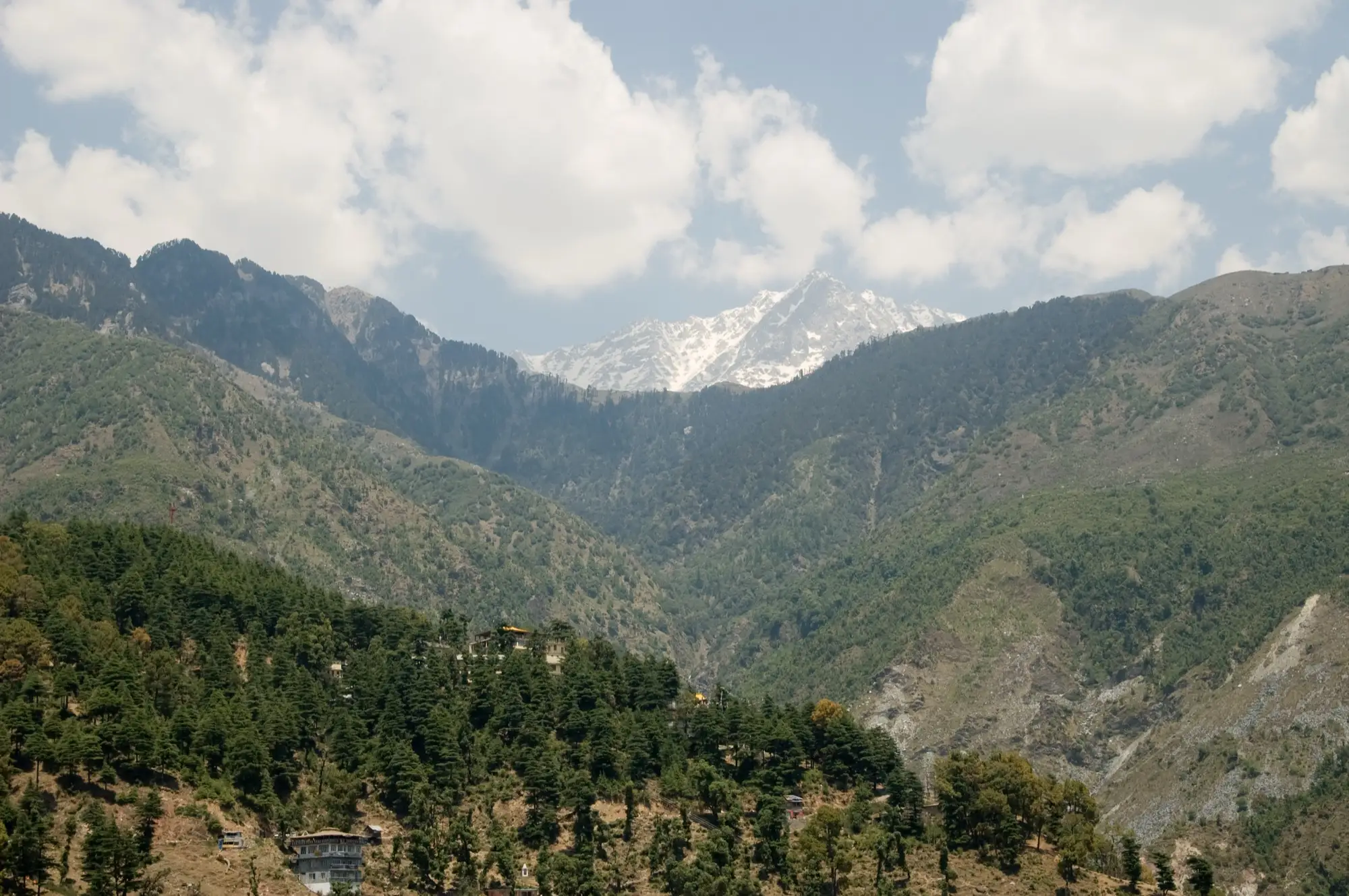 The Dhauladhar range seen from McLeod Ganj in May 2008. Photo: Kiran Jonnalagadda, CC BY-SA 2.0, via Wikimedia Commons.
How a weekly or monthly stay differs from a hotel or a holiday rental
A hotel sells a night and a view. A weekly or monthly stay sells somewhere to live and work, so the questions change. You are not asking about the breakfast. You are asking about the desk, the backup and what the cold does to the room in January.
The money changes too. In October 2026 a private double at a hostel in Upper Bhagsu listed at ₹3,200 a night, which is ₹22,400 for seven nights. Weekly prices on this site run from ₹5,000 to ₹16,000. The comparison is rough, since a hostel room and a whole home are not the same thing, but nightly rates are built for short trips and weekly and monthly rates are built for staying.
Holiday rentals are priced by the night, peak weeks cost more, and a listing may not mention the desk or the power backup, so you have to ask. On this site the shortest stay is one week, so nobody is trying to fit a workday into a three-night break.
What a month in the hills costs: our prices and typical rents
Monthly prices on this site run from ₹17,000 to ₹60,000, and most are between ₹21,000 and ₹38,000. Weekly prices run from ₹5,000 to ₹16,000. Those are for the home or room. Food, taxis, heating and a coworking desk, if you want one, come on top.
For a sense of the surroundings, a furnished studio or one-bedroom flat in Dharamkot or Upper Bhagsu asked ₹15,000 to ₹24,000 a month in 2026, and a comfortable month for one person, with cafe meals and a coworking desk, came to about ₹30,000 to ₹40,000. Cooking at home in a basic room brought it near ₹16,000. The cost of living in Dharamkot builds that budget line by line.
Monthly rents in hill towns compared: our listings and nearby ranges
| Place | What the range covers | Monthly range |
|---|---|---|
| Work From Hills listings | Homes and rooms around Dharamkot and Almora | ₹17,000 to ₹60,000, most ₹21,000 to ₹38,000 |
| Almora and Kasar Devi | Rooms we list in and around Almora | ₹17,000 to ₹40,000 |
| Dharamkot and Upper Bhagsu | Furnished studio or one-bedroom flat, 2026 | ₹15,000 to ₹24,000 |
| Manali | A room with wifi and a desk, August 2026 | ₹18,000 to ₹35,000 |
| Rishikesh, Tapovan | Furnished one-bedroom flat, asking rents in October 2026 | ₹16,000 to ₹40,000 |
The non-listing rows are asking prices from 2026, so treat them as a guide to scale. They are not quotes.
How booking with Work From Hills works, step by step
- Pick a home or room. Every listing shows the wifi speed with the date it was tested, the power backup and the work desk, plus the weekly and monthly price.
- Send a request with your dates. Choose a move-in date and how long you are staying, from one week up. You pay nothing at this step.
- The team confirms with the host. A person from the team checks your dates with the host, usually the same day.
- You receive an invoice. It arrives once the host has agreed.
- Pay the invoice. The booking is confirmed when the invoice is paid.
If you cancel at least 14 days before move-in for a stay of one or two weeks, or at least 30 days before for a longer stay, you get a refund. The full terms are on the cancellation and refunds page. Questions before you book go to hello@workfromhills.co.
Where Work From Hills has homes today: Dharamkot and Almora
Today there are 10 homes and rooms around Dharamkot and 9 around Almora and Kasar Devi, with more towns being added.
Dharamkot, above McLeod Ganj in Himachal Pradesh
Dharamkot sits at the top of the hill above McLeod Ganj, at about 2,100 m, with the Dhauladhar range in front of you. It has an established crowd of people who came for a week and stayed a season, with coworking desks, events and people keeping your hours. The village is lively for the hills, but the last stretch to most doors is a steep footpath, so pack light.
Fibre reaches many homes, rain makes it patchier, and the best months are March to early June and October to November. McLeod Ganj, a 25 to 40 minute walk down, is the high street for pharmacies, groceries and noise. Browse the homes and rooms in Dharamkot.
Almora and Kasar Devi, in Kumaon in Uttarakhand
Almora is a ridge town of about 1,600 m with fibre, a bazaar, banks and hospitals. Most homes we list sit up on the Kasar Devi hill, about 2,100 m, a few kilometres out, among pine and deodar. The hill is quiet and on a clear day the snow peaks line up across the valley. It is also colder, signal can fade indoors, and a taxi down to town costs about ₹300 to ₹500 one way, so plan groceries in bulk.
Rooms we list around Almora run ₹17,000 to ₹40,000 a month or ₹5,000 to ₹12,000 a week. Leopards use the forest, so carry a torch after dark. See the homes in Almora and Kasar Devi, and read about long stays at Kasar Devi and Almora before you choose between the hill and the town.
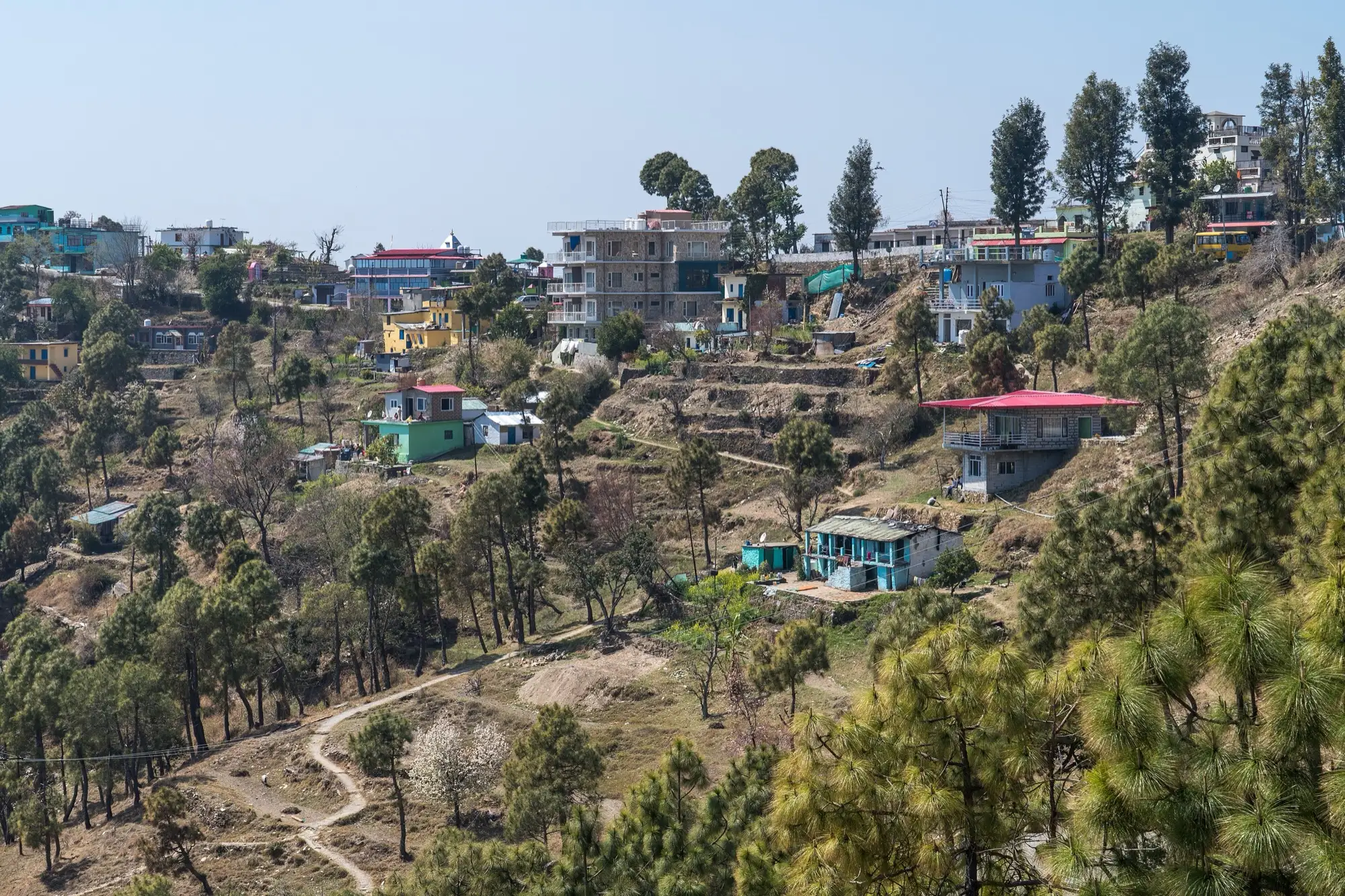 Kasar Devi village in March 2024. Photo: Alexkom000, CC BY 4.0, via Wikimedia Commons.
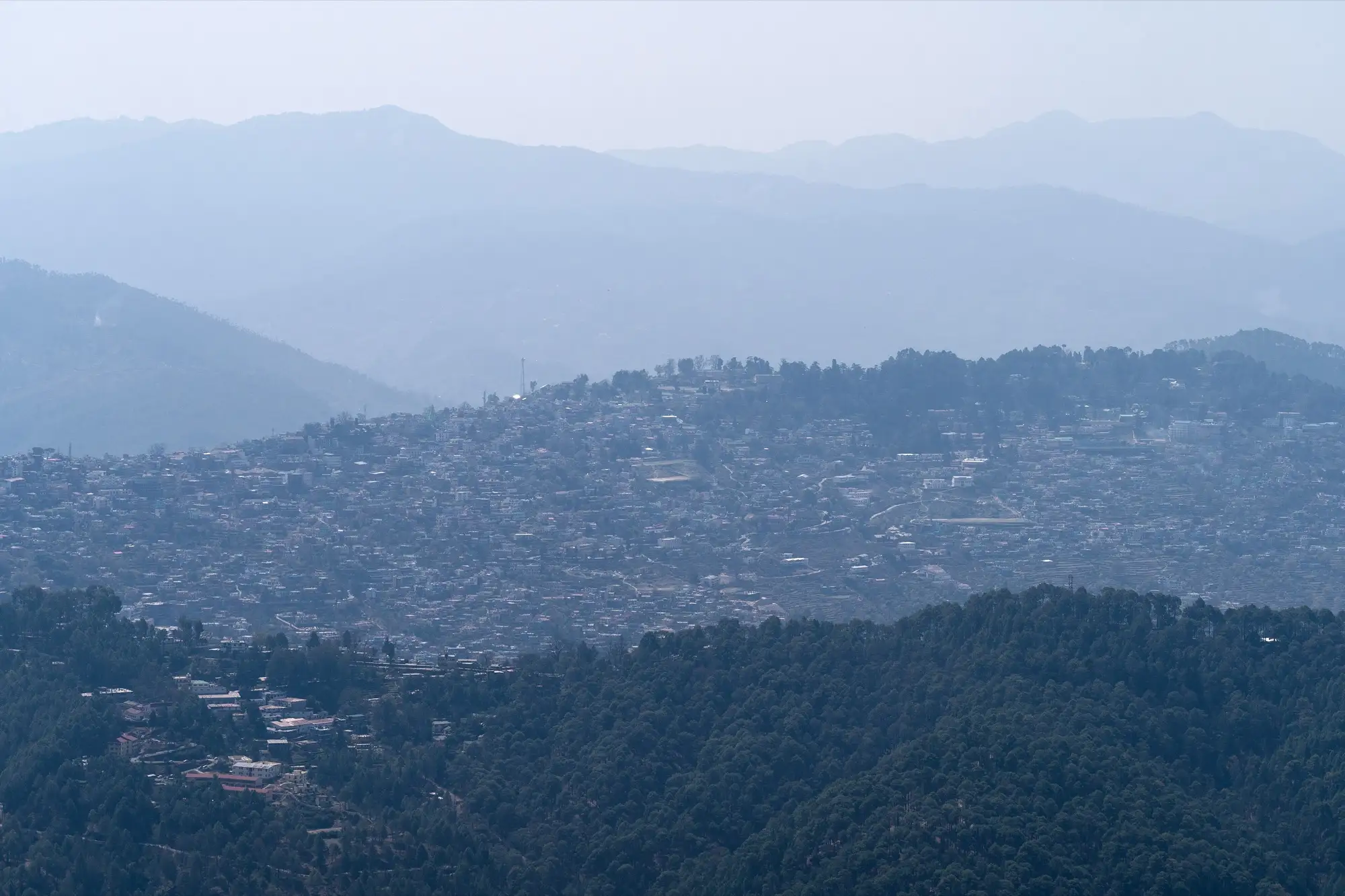 Almora seen from Crank’s Ridge in March 2024. Photo: Alexkom000, CC BY 4.0, via Wikimedia Commons.
When to come: seasons for working from the hills
For most people the easy windows are spring and autumn. Dharamkot is best from March to early June and from October to November. Almora is easiest from March to May and from mid-October to November. October is the month to aim for in Dharamkot, with 53 mm of rain against 859 mm in July and 942 mm in August at Dharamshala below.
The monsoon needs care. In 2026 it reached Himachal on 30 June and withdrew on 3 October, so September is still wet in Dharamkot. In Almora the monsoon runs from July to mid-September, wettest in July and August, with landslides that can close the highway. Those months are the ones to avoid for a first stay, because the roads and the power are the risk.
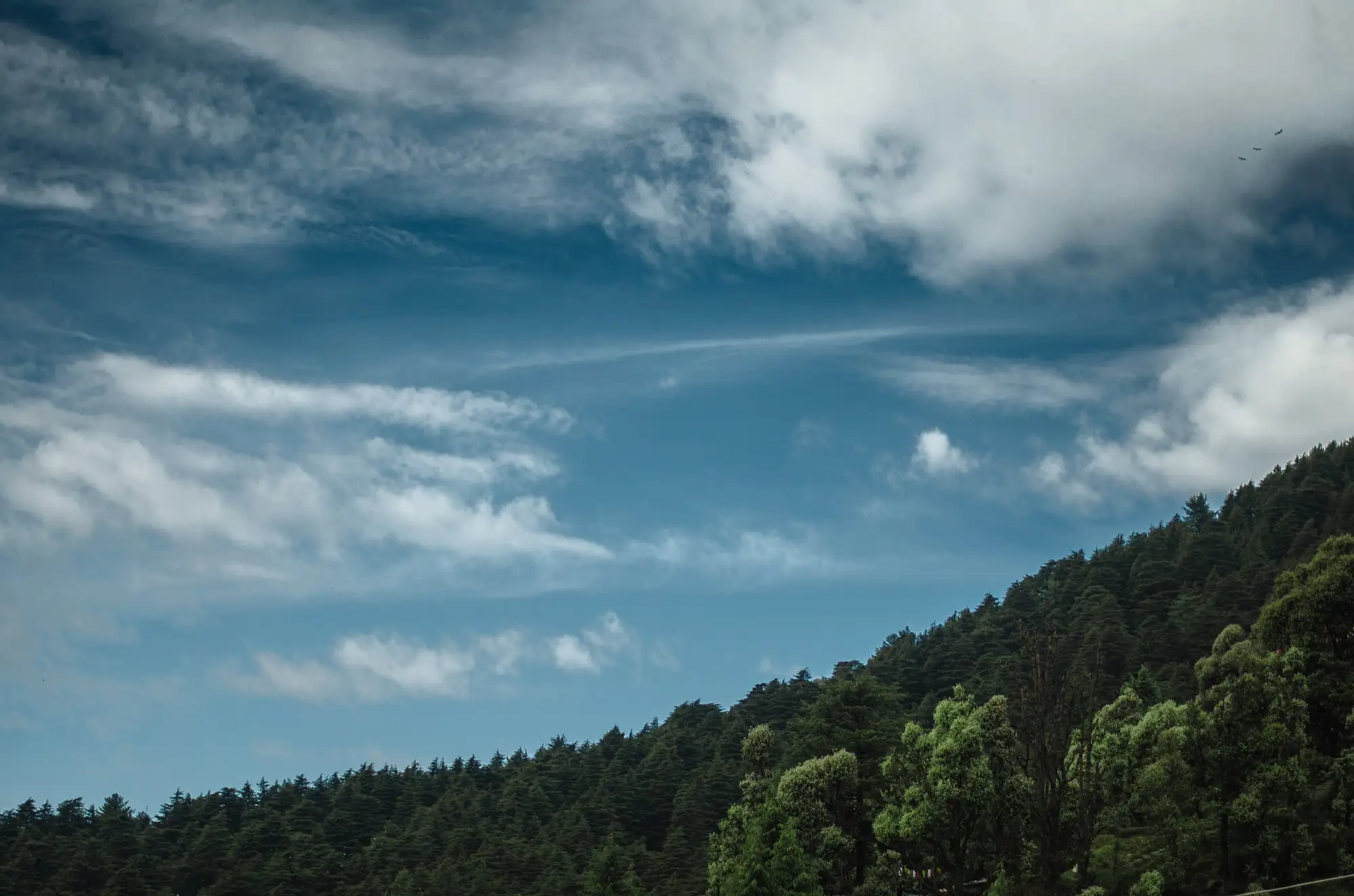 Cloud and a forested slope at Dharamkot.
You can work through winter if you prepare for it. January days at Dharamshala average 16.0°C and nights 5.9°C, Almora’s hill is colder, and snow, when it comes, is what closes roads and takes out the power. A winter stay needs a room with real heating and a backup that covers the router.
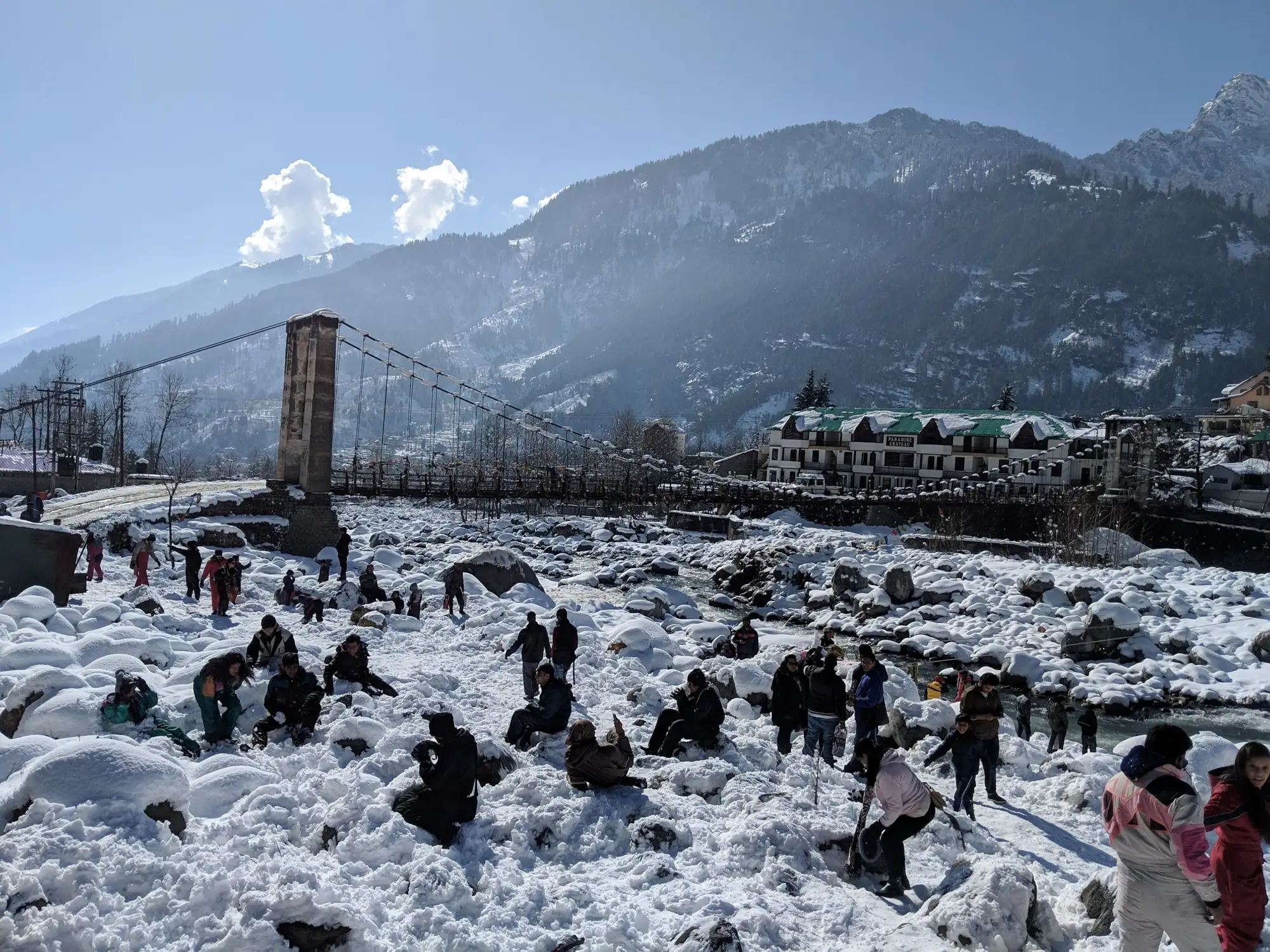 Manali under snow in December 2018. Photo: Shivendujha, CC BY-SA 4.0, via Wikimedia Commons.
If you are choosing a first month, the best time to visit Dharamkot gives the detail month by month. If the decision is weekly or monthly, renting by the month in the hills covers the trade.
Is working from the hills right for you?
Go if your work travels well, you can live with a quiet evening, and you are happy to ask a host six plain questions before you book. Start with one week in March, April, October or November, check the connection against your own call schedule and see how the nights feel, then decide on a month.
Wait if your job cannot survive an outage, if you need a hospital close every day, or if you want winter without a heater. If you want to see what is available, the stays page lists every home and room, and the shortest stay is one week.
Frequently asked questions
How long should my first stay be when I work from the hills?
One week is the shortest stay on this site, and it is enough to learn three things: whether the connection holds through your longest call day, whether you like the walk to the road, and how the nights feel. If all three go well, extend or book a month next time.
Can I work from the hills on mobile data alone?
Often yes, if the network holds in your room. On 28 February 2026, about 97% of villages in Himachal Pradesh and about 99% in Uttarakhand had 4G coverage, but village coverage does not guarantee signal indoors. Ask your host which network, Jio, Airtel or BSNL, works best in the room, and keep a second SIM from another network.
What should I ask a host before booking a stay in the hills?
Six things: the wifi speed and the date it was tested, which provider or network it runs on, what the power backup runs and for how long, whether the room has heating and who pays for it, what the desk and chair are like, and how you get to the door with luggage and after dark.
What happens if I need to cancel a stay?
You get a refund if you cancel at least 14 days before move-in for a stay of one or two weeks, or at least 30 days before move-in for a longer stay. The full terms are on the cancellation and refunds page.
Do I pay when I send a booking request?
No. You send your dates and nothing is charged. The team confirms the dates with the host, usually the same day, and then sends an invoice. The booking is confirmed when the invoice is paid.
Which towns can I book today, and are more coming?
Today there are 10 homes and rooms around Dharamkot in Himachal Pradesh and 9 around Almora and Kasar Devi in Uttarakhand. More hill towns are being added. Write to hello@workfromhills.co if you are looking for a particular place.
Homes and rooms you can book now
By the week or the month. See all stays
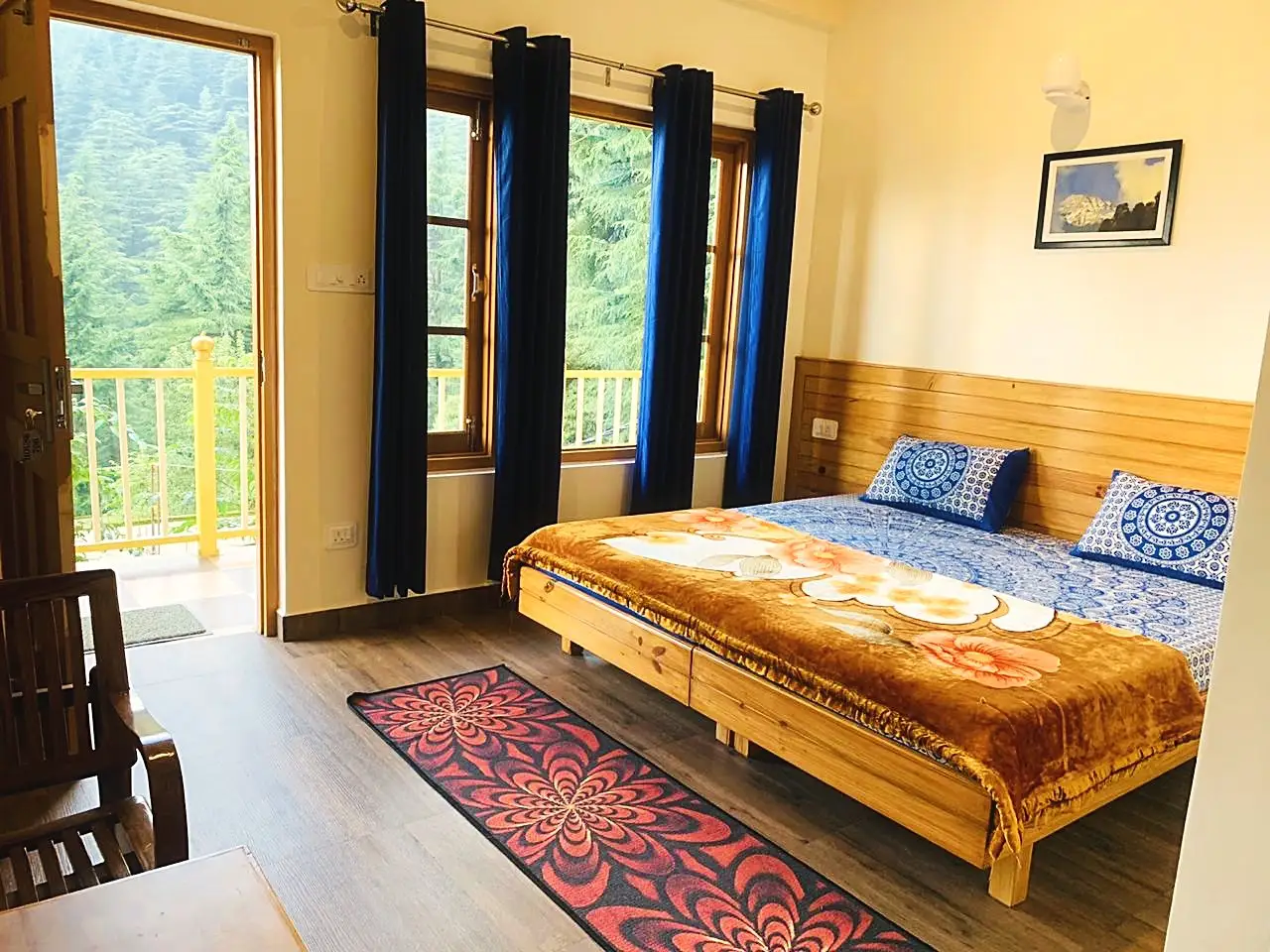

Dharamkot 07
Balcony room above the valley
- 49 Mbps wifi
- Max 2 people
- Power backup
- Balcony
₹25,000/month₹7,000 /week
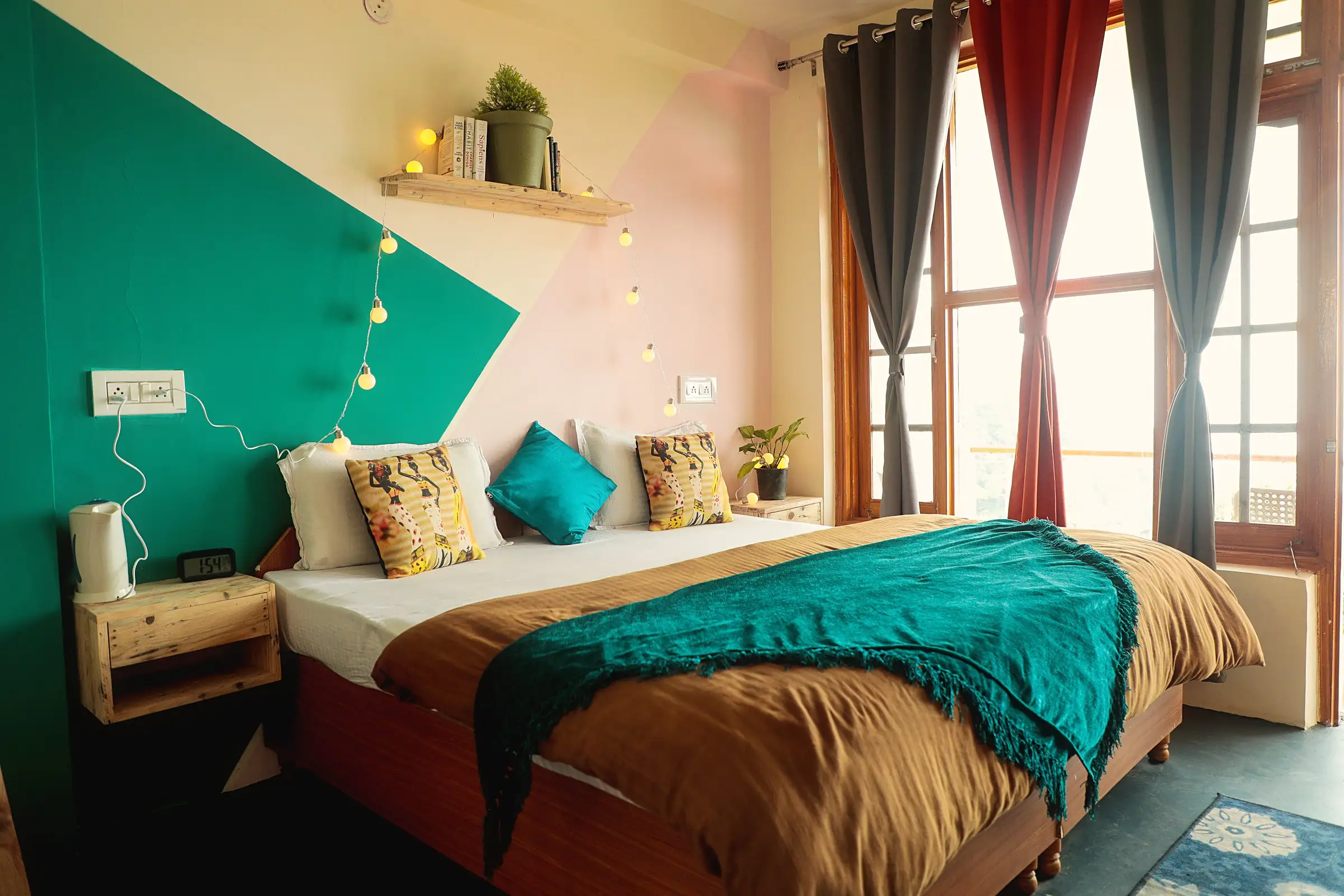

Dharamkot 01
Balcony room with ridge views
- 91 Mbps wifi
- Max 2 people
- Power backup
- Balcony
₹32,000/month₹9,000 /week
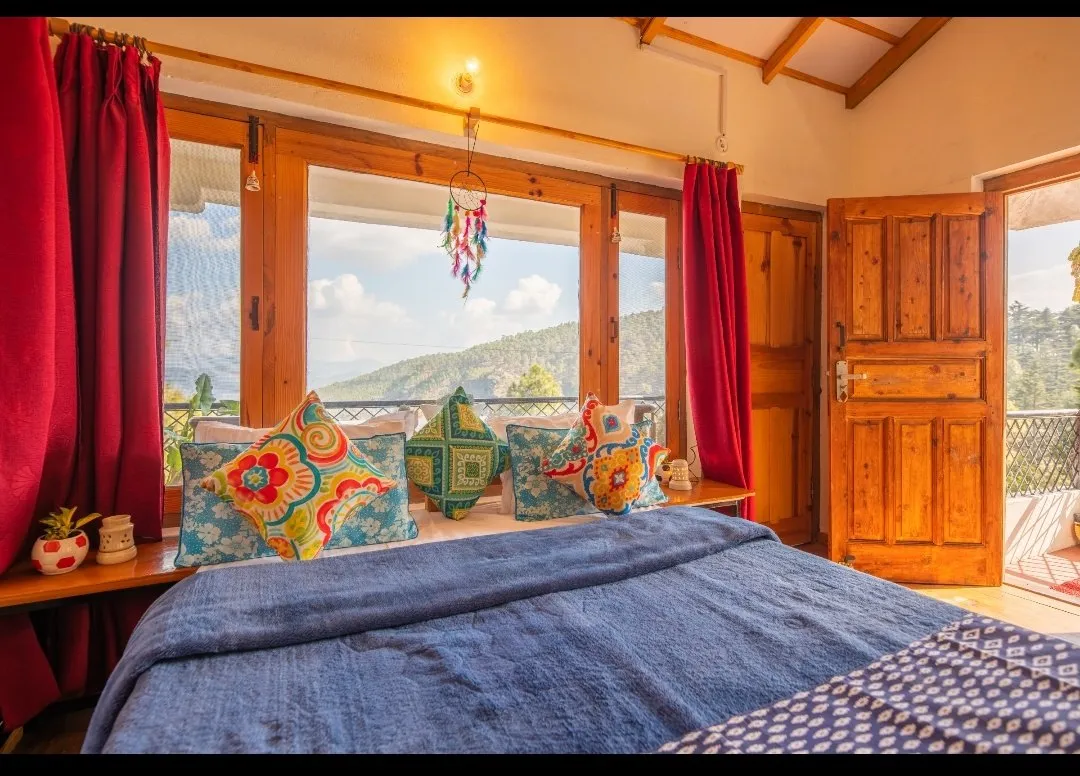

Almora 03
Corner room with a pine balcony, Kasar Devi
- 91 Mbps wifi
- Max 2 people
- Balcony
₹21,000/month₹6,000 /week
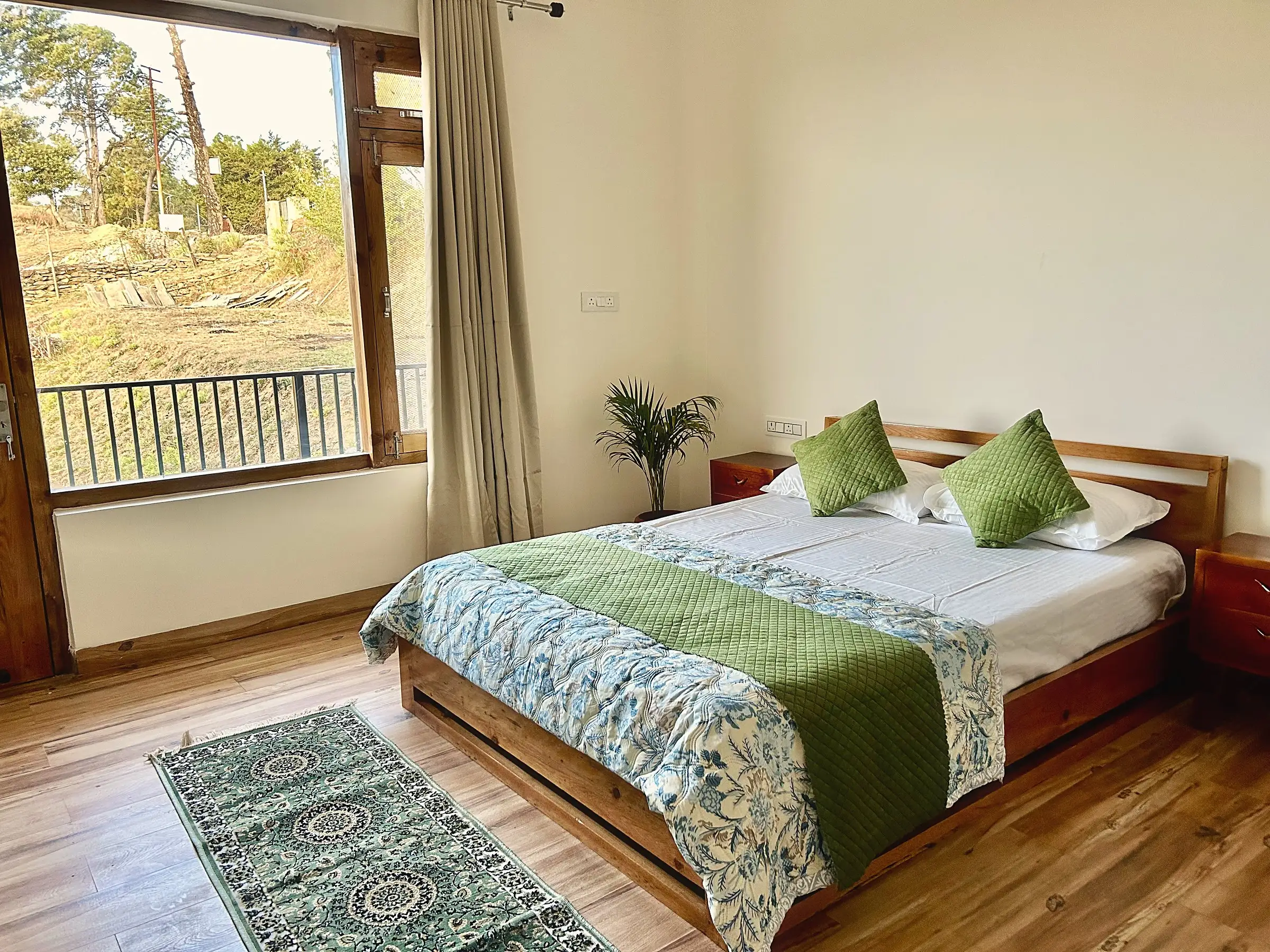

Almora 09
Desk room with a ridge-view balcony, Kasar Devi
- 73 Mbps wifi
- Max 2 people
- Work desk
- Balcony
₹23,000/month₹6,500 /week
Keep reading
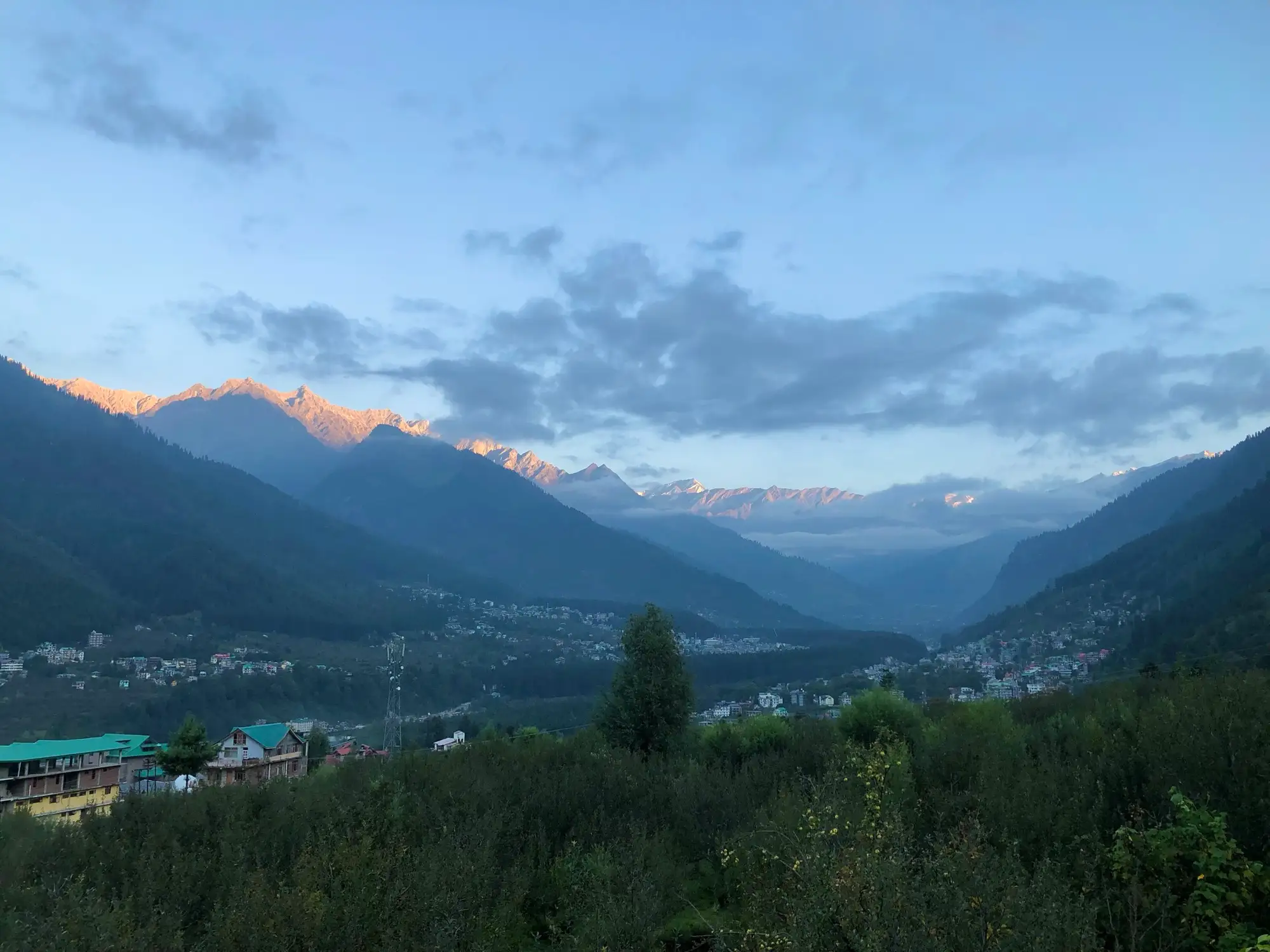 Workation · 15 min readWhat is a workation? A practical guide to working from the mountainsWhat a workation is, how long to stay, what to check before you book and what it costs in an Indian hill town.
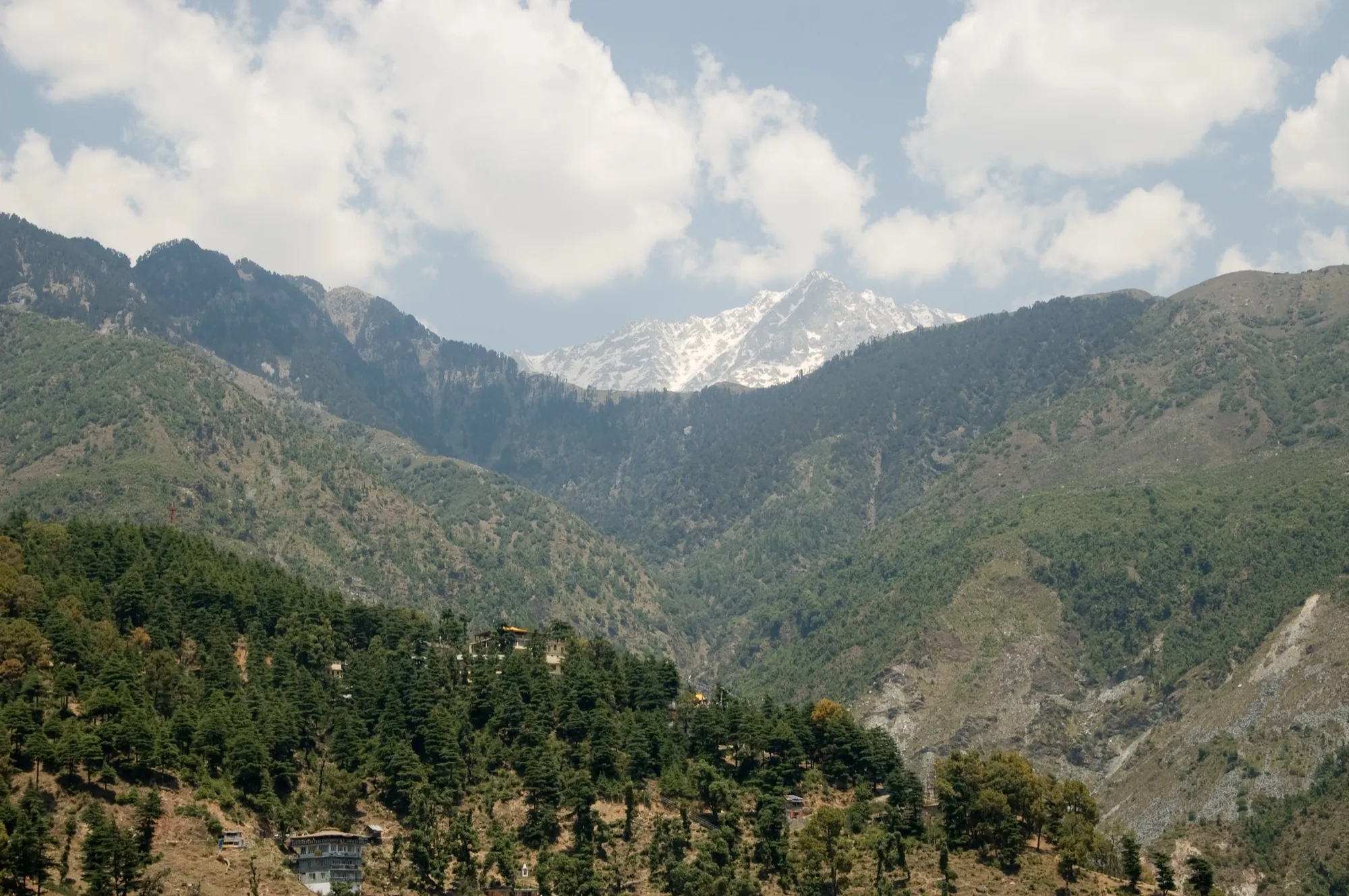 Workation · 16 min readWorkation in Himachal: the honest guide to towns, internet, costs and seasonsTen Himachal towns and villages compared for a week to a few months of remote work, with the monsoon and snow facts.
 Workation · 15 min readWorkation in Uttarakhand: the towns that work for a week or a monthTen Uttarakhand towns compared for a working week or month: internet, cost, monsoon, power and the route from Delhi.
 Places · 17 min readHill stations near Delhi: 25 picks by drive timeHeight, road distance, drive time and best months for 25 hill towns, from a 4 hour drive to a two day one.