Workation
What is a workation? A practical guide to working from the mountains
What a workation is, how long to stay, what to check before you book and what it costs in an Indian hill town.
Last updated 11 Oct 2026 · 15 min read
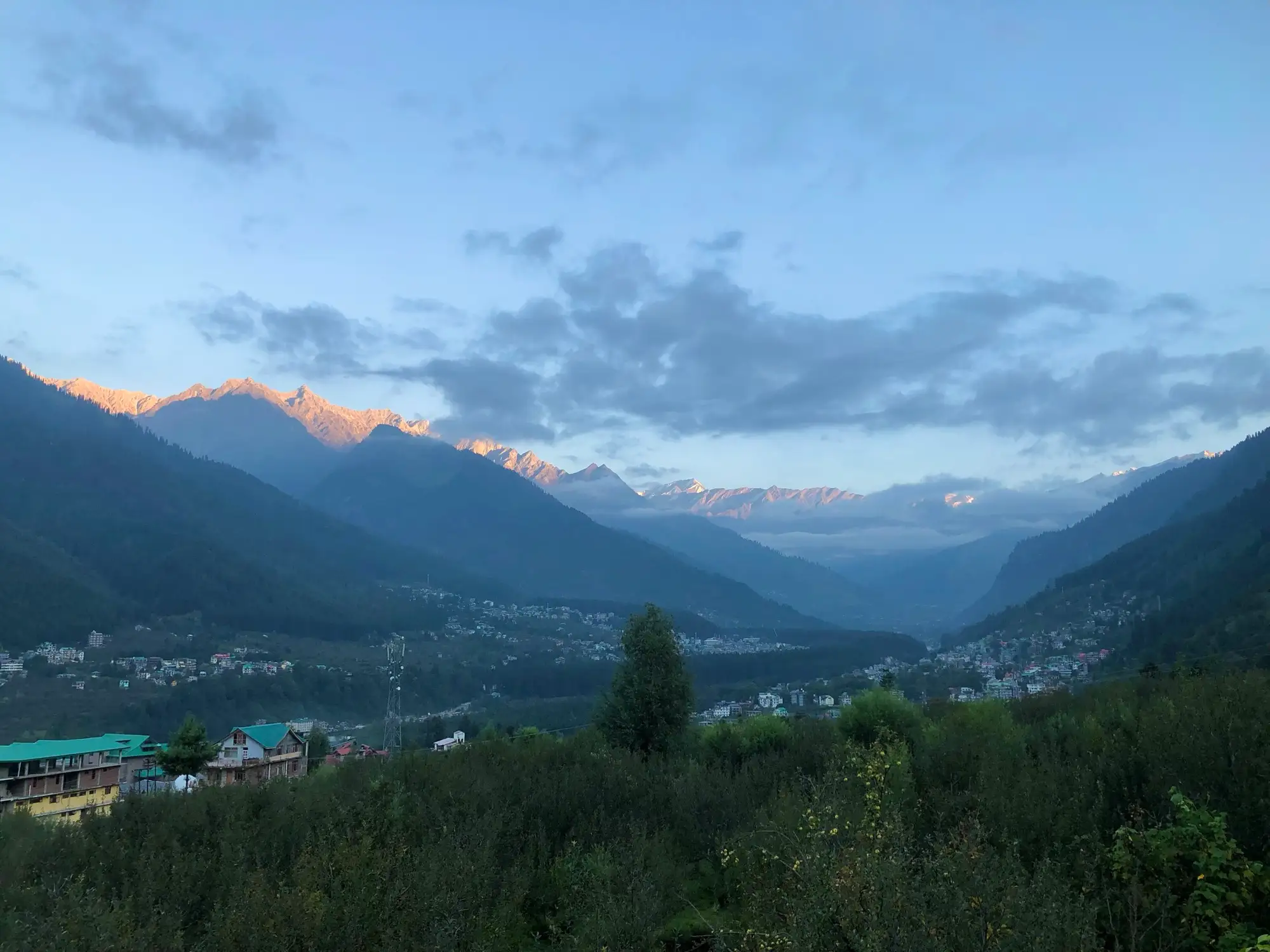
A workation is a stay away from home where you keep doing your job and spend your free hours somewhere you would normally only visit. In India's hills, one week is the sensible minimum, and homes and rooms on Work From Hills cost ₹5,000 to ₹16,000 a week or ₹17,000 to ₹60,000 a month. Before you book, check the internet (with a second network), the power backup, the desk and the road in.
On this page
- Workation meaning
- Workation compared with a holiday, remote work and digital nomad life
- How long should a workation be
- How to ask your employer for a workation in India
- Workation checklist
- Workation cost in an Indian hill town
- What to pack for a working week in the hills
- Workation mistakes to avoid
- Where to go for a workation in India’s hills
- Working remotely from India as a visitor
- Should you take a workation? Who it suits and who should wait
- Frequently asked questions
A workation is a trip where you keep your job going and change only the place you do it from. In India that usually means a week or a month in a hill town, with a desk, a decent connection and the same calls you would have taken at home. Homes and rooms on this site run ₹5,000 to ₹16,000 a week and ₹17,000 to ₹60,000 a month, and the rest of this guide covers what the word means, how long to stay, how to ask your employer, what makes a place work, and what it costs. If you would rather start by looking at places, our homes and rooms are let by the week or the month.
Workation meaning: a working trip to a holiday-style place
The word is a blend of “work” and “vacation”. “Workcation” is the same word, spelled out in full, and “workation” is listed as its alternative form. Dictionaries list it as informal English used mainly in Canada and the US, which is why it sounds slightly American next to the Indian “holiday”. It was already in print by 2013.
You work your usual hours, and the rest of the day belongs to the place. A workation is not a holiday with emails: the work days stay work days. It is also not a move: you have a home to return to, and the stay has an end date.
Workation compared with a holiday, remote work and digital nomad life
Four things get confused, and they differ on whether you work, where you sleep and how long you stay.
| Holiday | Remote work at home | Workation | Digital nomad | |
|---|---|---|---|---|
| Do you work? | No | Yes, your usual days | Yes, your usual hours | Yes, it is how you earn |
| Where you sleep | Away from home | Your own home | A rented home or room away from home | Hotels, rentals, wherever you are that month |
| How long | A few days | Ongoing | One week to a few months | Months or years, often on the move |
| Home to return to | Yes | You are in it | Yes | Often few possessions and no fixed base |
| Leave used | Yes | No | Depends on your employer | None, work is the income |
A digital nomad travels while working remotely, from hotels, cafes, libraries and co-working spaces. A workation is the short, planned, single-place version of that, and it suits an employee with a job and a fixed address: one booking, one desk, one connection to test.
How long should a workation be: why one week is the minimum
Plan on one week as the shortest stay, and on one to two weeks for a first one. The first day goes on the journey: the overnight Volvo from Delhi to Dharamshala takes about 12 to 13 hours and leaves a taxi ride up the hill. The overnight Volvo from Delhi lands in Manali at 7 or 8 am. The second goes on finding out whether the connection, the desk and the noise are what the listing said. Anything shorter than a week is mostly arriving and leaving.
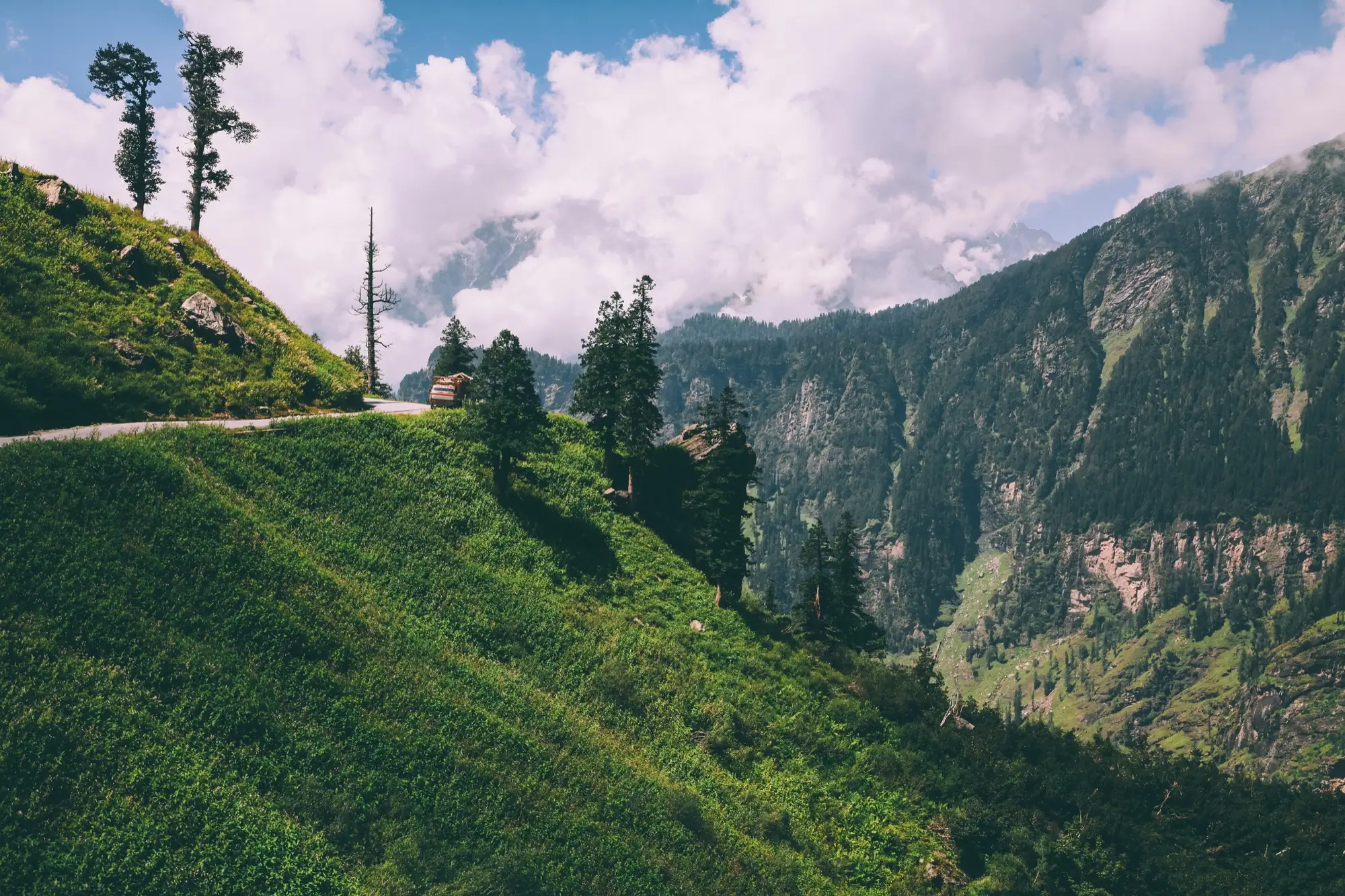 A hill road above a steep valley.
- One week: a trial. Enough time to test the place against your calendar, and the length our shortest stays run to. Pick this if your employer is unsure or you have never worked away from home.
- Two weeks: the stay we would pick first. A routine has time to form, and one bad day of signal costs you a smaller share of the trip.
- A month: long enough to cook, to find the shop and the cafe, and to stop spending energy on being a visitor.
A month also changes the cost. Across the homes on this site, weekly prices work out at about ₹710 to ₹2,290 a night and monthly prices at about ₹570 to ₹2,000, and most monthly prices (₹21,000 to ₹38,000) come to ₹700 to ₹1,270 a night. The exact saving depends on the home, so ask for both prices for your dates.
How to ask your employer for a workation in India
Start with the policy you already have. At the big IT employers, 2025 and early 2026 brought a firm turn towards the office. TCS ended work from home in 2024 and links quarterly variable pay to attendance. Infosys has asked for at least 10 office days a month since 10 March 2025. Wipro has required six hours in the office on each of three days a week since 1 January 2026, and takes leave for a shortfall. HCLTech sets it by level: staff in the E4 band come in once a week and E5 and above three days a week. Wipro also cut its yearly allowance of fully remote days from 15 to 12, and those days are meant for illness, self-care or looking after family.
Outside those firms the picture is mixed. An analysis of 4.68 million Indian job postings from late June to late September 2026 found 57.2 percent on-site, 34.5 percent hybrid and 8.4 percent remote. That counts postings, not employees, but a hybrid or remote role leaves the most room for a workation.
Ask in writing, and make a yes easy.
- Dates and days: say which days are work days and which are leave. If your company has set office days, say whether you want them waived or covered by leave.
- Hours: your usual hours, and the hours you can guarantee for calls. India has a single time zone, UTC+5:30, with no daylight saving, so London is 4.5 hours behind in summer and 5.5 in winter. A 10 am call in London in January is 3:30 pm for you.
- The connection: the home’s tested speed with its date, the network you will use as a backup, and the power backup.
- A trial: offer a week before you ask for a month.
- Cover: who picks up if the connection drops, and how they reach you.
Questions about data security, VPNs and tax belong with your HR team; this guide cannot say what your contract allows.
Workation checklist: what decides whether a place works
Photos show a view. These seven things decide whether you can work there, and each is a question for the host.
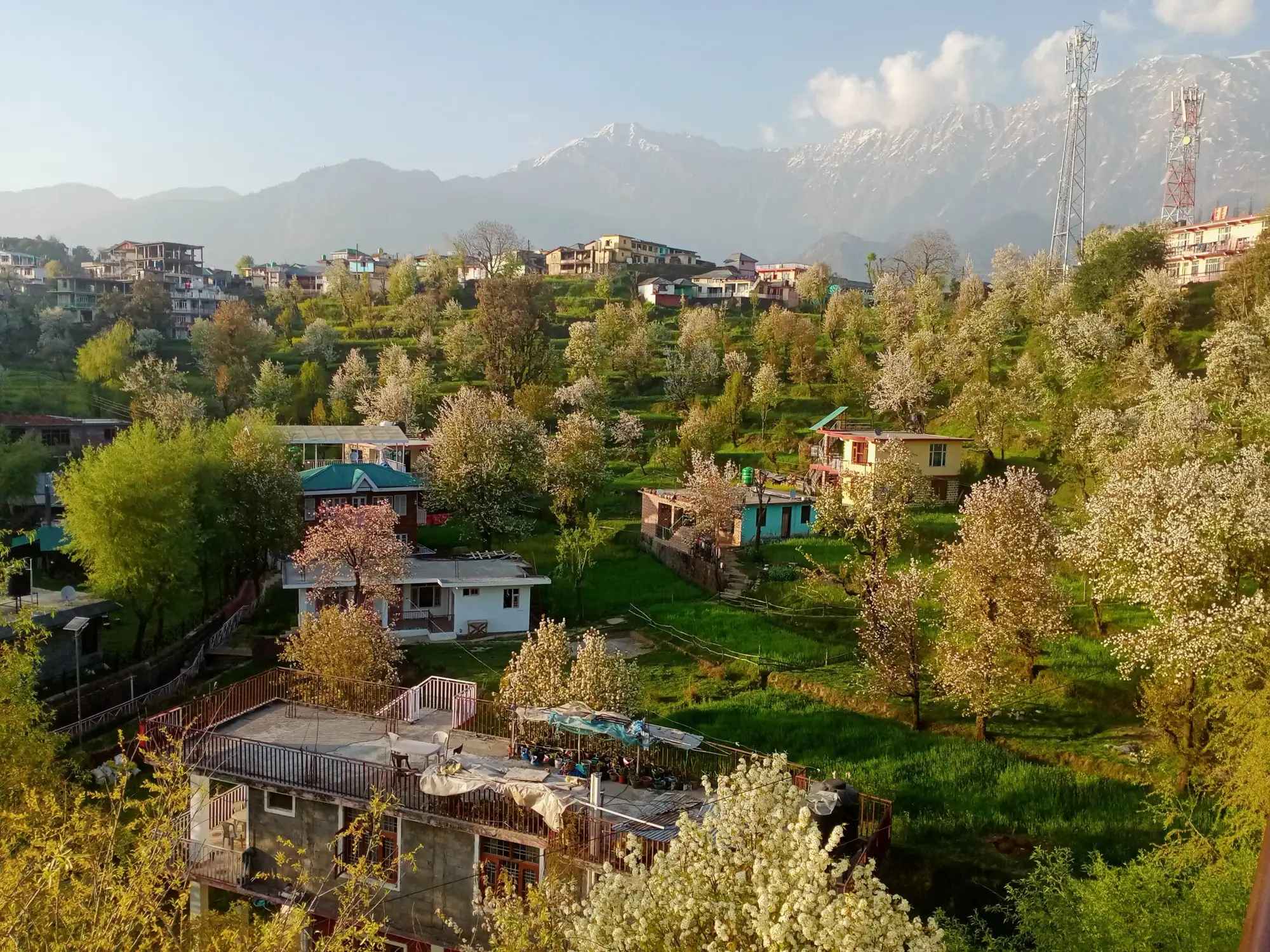 Naddi in March 2022. Mobile masts on a ridge say little about the signal inside a room. Photo: Anitya dhiman, CC BY-SA 4.0, via Wikimedia Commons.
- Internet, with a backup network. Zoom’s published figures put a 720p group call at 2.6 Mbps up and 1.8 down, and a 1080p call at 3.8 up and 3.0 down. Ask for a speed test taken in the home, not the town, and for its date. On a hillside signal can fade indoors, so a second SIM from another operator is the cheapest insurance. Mobile data from Jio, Airtel or BSNL is a real connection, and your host can tell you which network works in the room.
- Power backup. Ask whether there is an inverter, whether it runs the router and not only the lights, and how long it lasts.
- A desk and a chair. A table you can sit at for six hours, with a chair that has a back.
- Noise. Ask what is next door and what the road does at 8 am. Calls need a quiet room more than a fast line.
- Heating. January at Dharamshala town runs 5.9 to 16.0°C, and Dharamkot is a few degrees cooler. Ask whether heating is in the rent or charged by the day: one guesthouse in Dharamkot charged ₹200 a day for a gas heater in 2023.
- Distance to a market and a hospital. Ask for the road distance to the nearest shop and to a hospital with an emergency ward, and how long that takes after rain or snow. In Dharamkot, everything above the road head is carried on foot.
- Time zone and call hours. If your team is outside India, count the hours before you book. A 7 pm call in New York in winter is 5:30 am the next day in India.
Workation cost in an Indian hill town: by the week and by the month
Rent is the biggest line, and food, heating and a desk away from the room decide the rest. The figures below are per person and leave out the journey.
| What | By the week | By the month |
|---|---|---|
| Work From Hills homes and rooms | ₹5,000 to ₹16,000 | ₹17,000 to ₹60,000, most ₹21,000 to ₹38,000 |
| Dharamkot, all living costs | Book a few nights first, then agree the month | About ₹16,000 frugal, ₹30,000 to ₹40,000 comfortable, about ₹66,000 generous |
| Manali, all living costs | ₹14,250 to ₹58,800 at nightly rates, with food, local transport and a SIM | ₹18,300 to ₹29,800 frugal, ₹35,800 to ₹69,800 comfortable |
| Rishikesh, all living costs | ₹4,000 for a dorm bed to ₹50,000 for a comfortable flat | ₹19,300 to ₹33,200 frugal, ₹46,300 to ₹70,000 comfortable |
Three things push a month above these numbers. A desk in a coworking space runs ₹4,000 to ₹8,000 a month in Dharamkot, or ₹500 to ₹800 a day. Heating in winter can add to the power and gas line. And the journey is extra: a Volvo from Delhi to Dharamshala is roughly ₹1,250 to ₹1,550. The Dharamkot cost of living guide, the Manali one and the Rishikesh one build each budget line by line. Manali’s comfortable month costs more than Dharamkot’s, and Rishikesh is a vegetarian town where liquor is banned across the municipal area, so the food line behaves differently there.
What to pack for a working week in the hills
Pack for the desk first and the view second. A short list covers most of it.
- A power bank that can charge a laptop, not only a phone. A cut during a call costs you little if the laptop has an hour left in it.
- An extension board with surge protection, so the laptop, phone and router can run from one socket.
- A second SIM from another network, and a phone able to share its data as a hotspot.
- Headphones with a microphone, for calls near a busy road or a thin wall.
- Layers and warm socks, because evenings in the hills cool quickly.
- Offline copies of the files and maps you need.
- Small notes. Card and UPI are not reliable everywhere in a hill village, so keep some cash for the shop and the auto.
- Your regular medicines and a basic first-aid kit.
Workation mistakes to avoid: photos, Monday arrivals and closed roads
Booking on photos alone. A picture of a desk with a view does not tell you the speed, the noise or what the backup runs. Ask for a dated speed test and a video tour of the desk and the room.
Arriving on a Monday morning with calls. The overnight Volvo from Delhi lands at 7 or 8 am in Manali, and Dharamshala is 12 to 13 hours by Volvo, then a taxi up the hill. Arrive on Saturday or Sunday, so Monday begins with a settled desk.
Treating the monsoon as ordinary weather. From July to September landslides cut roads. The Mandi to Kullu stretch near Manali was closed for days in the 2025 monsoon, and a landslide in September 2025 buried the Almora to Haldwani highway when 59 roads were shut in the district. The Dharamshala to McLeod Ganj shortcut was washed away in August 2025 and a 4 km link became a 13 km detour.
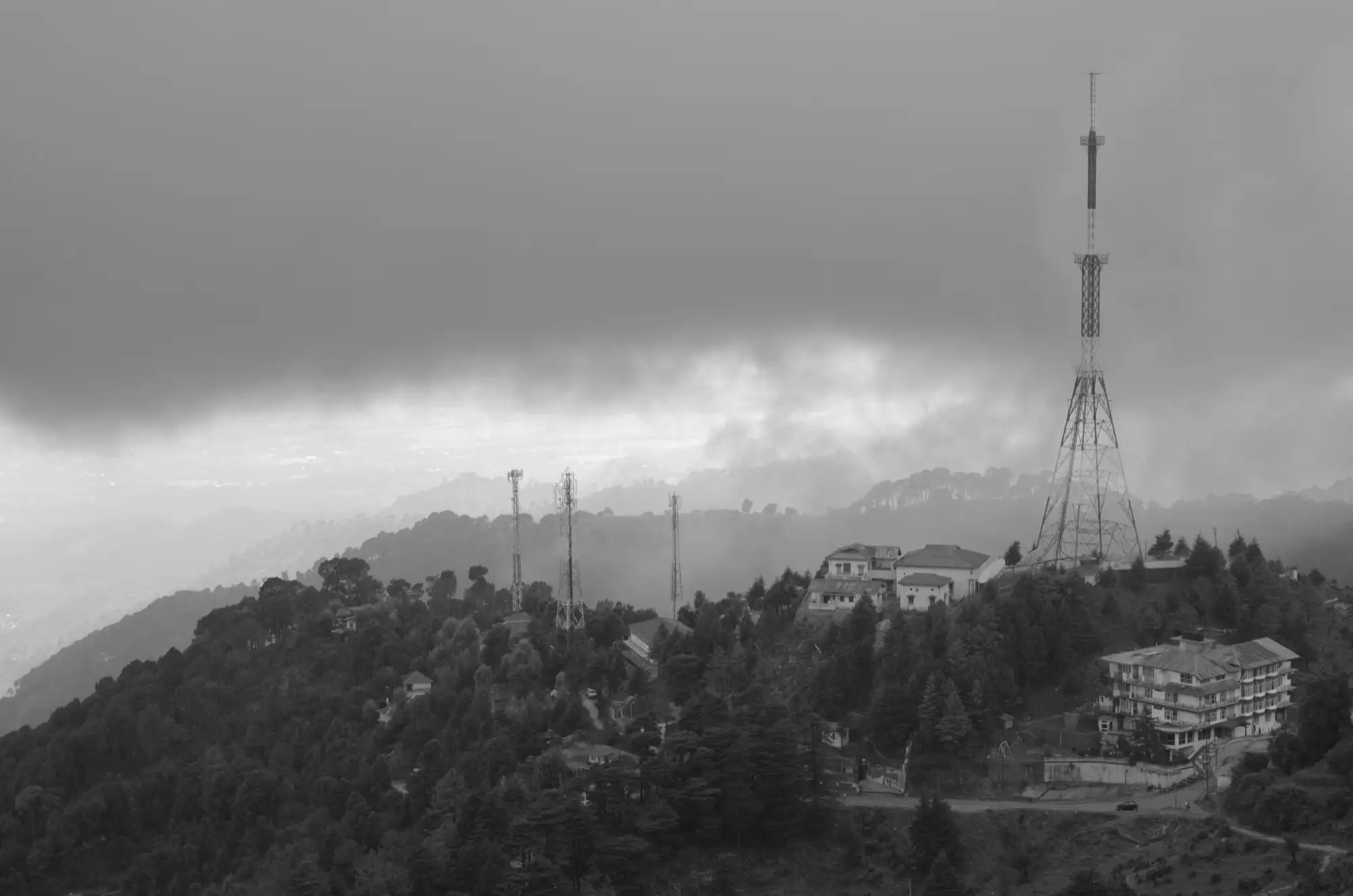 Rain over the ridge near upper Dharamshala in August 2009. Photo: Kiran Jonnalagadda, CC BY-SA 2.0, via Wikimedia Commons.
From July to September we would not fix a deadline for the day you must be at the desk. Ask your host which road is open before you set out, and if one shuts while you travel, stay where there is a bed rather than join the queue.
Forgetting that snow jams roads too. In January 2026, after the first snow in three months, Manali and Kullu had an 8 km traffic jam, and officials told people to avoid unnecessary trips.
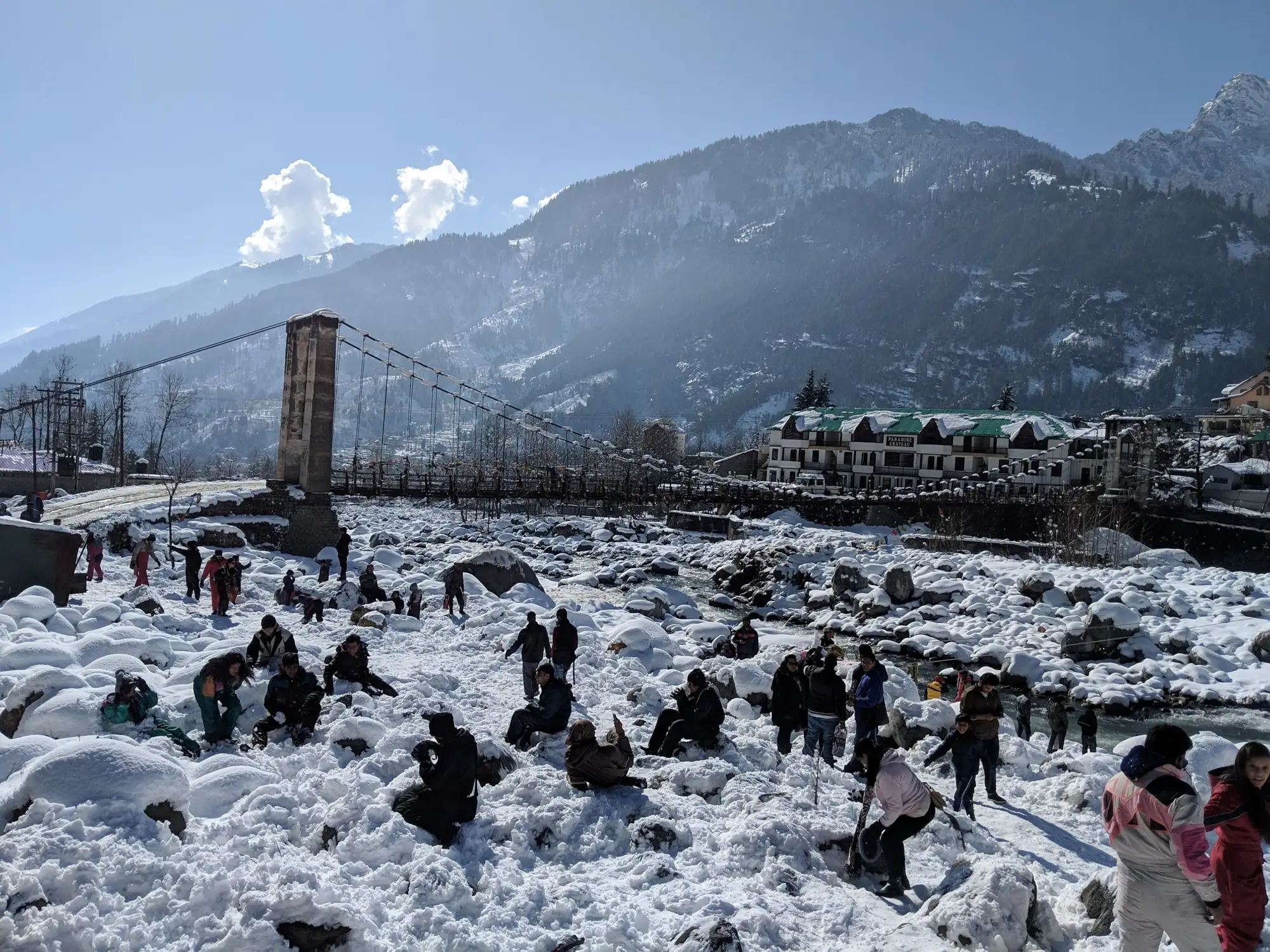 Fresh snow on the Beas at Manali in December 2018. Photo: Shivendujha, CC BY-SA 4.0, via Wikimedia Commons.
Where to go for a workation in India’s hills
Choose by season, and by how quiet you need the evenings to be.
 Dusk on the Ganga at Rishikesh.
- Dharamkot and McLeod Ganj, Himachal Pradesh. A village on a ridge above McLeod Ganj, between about 1,900 and 2,100 m. March to early June and October to November are the easy months. See the homes and rooms around Dharamkot, and workation in Himachal compares the towns across the state.
- Almora and Kasar Devi, Kumaon, Uttarakhand. Kasar Devi is a village about 8 km from Almora at 2,116 m, and the winter nights run near freezing. See the homes and rooms around Almora, and Kasar Devi and Almora for long stays goes into the village.
- Manali, Himachal Pradesh. A larger town with the widest choice of cafes and rooms, and a comfortable month that costs more than Dharamkot’s. The Manali guides cover the costs, the monsoon closures and the winter snow.
- Rishikesh, Uttarakhand. A river town with yoga classes, where food is vegetarian, and where the roads slow during the Kanwar weeks in late July and August. The Rishikesh guides cover costs and the closed bridges.
The smaller villages suit a quiet week most: Dharamkot above McLeod Ganj, Naddi nearby and Kasar Devi above Almora. Arrive in daylight and in dry weather: the last 2 km of road to Dharamkot is the weak link in rain. If your plan is a month or longer, renting by the month in the hills covers deposits and agreements.
Working remotely from India as a visitor: what official pages say
If you are not an Indian citizen, start with the visa. The e-Visa categories are e-Tourist (one month, one year or five years), e-Business and e-Conference. On the one-month e-Tourist visa a single visit can last up to 90 days, or 180 days for citizens of the USA, UK, Canada and Japan. The e-Business visa allows up to 180 days a visit, and a stay beyond that needs registration with the Foreigners Regional Registration Office within two weeks after the 180 days. A consulate’s page says time on e-Tourist and regular tourist visas together is limited to 180 days in a calendar year, and that you cannot enter India by land on either.
The British government’s advice adds that without an OCI card, a stay of more than 180 days needs registration with that office within 14 days of arrival, and that you could be refused permission to leave if you skip it. It also lists tourist, business and work as separate visa categories and says to get the right one for your trip.
The visa rules are written for tourism and business visits, and they do not describe working for a foreign employer from a rented room. Check with the Indian embassy or consulate in your country before you book, and keep their answer in writing. This is not legal advice.
Hosts have a duty of their own. The government’s foreigners registration portal says accommodation providers, hotels and educational institutes must file a Form C for every foreigner, OCI cardholders included. Expect your host to ask for your passport and visa details when you arrive. That is the law, not suspicion.
Should you take a workation? Who it suits and who should wait
Go if your employer has agreed in writing, your work needs only a laptop and a connection, and you can spare a day at each end for travel. Take one or two weeks the first time.
Wait if your company has fixed office days you cannot swap, if your role needs a guaranteed fast line you have not been able to test, or if you plan to arrive in the middle of the monsoon and work to a fixed start. Move the dates to the drier months and the same plan works: for Dharamkot, March to early June or October to November.
When you are ready, send a request for a home with your dates. There is no payment at that step, and the team confirms with the host before anything is invoiced.
Frequently asked questions
Can I do a workation if my company wants me in the office three days a week?
Only if your employer agrees. At large Indian employers the office-day rules are enforced through leave balances, so ask whether the office days can be waived for the period or whether they count as leave, and get the answer in writing before you pay for a stay.
What internet speed do I need for video calls on a workation?
Zoom's published figures are 1.2 Mbps up and down for a one-to-one 720p call, 2.6 up and 1.8 down for a 720p group call, and 3.8 up and 3.0 down for 1080p. Those are per call, so a second person on the same line needs the same again. Ask for a speed test taken in the home, with its date, and keep a SIM from a second network as a backup.
Which months are best for a workation in the hills?
For Dharamkot, March to early June and October to November. July and August are the wettest months and the roads are most likely to close, and December to February is cold. Around Almora and Kasar Devi the winter nights are near freezing and July and August carry landslide risk, so the same windows hold.
Is a workation counted as leave?
That is your employer's decision. Days you work are work days and days you take off are leave, wherever you are. If your company expects you in the office on some days, ask in writing how those days will be treated while you are away.
Do I need my own wifi router on a workation?
No, but carry a SIM from a second network and a phone that can share its data. Mobile data from Jio, Airtel or BSNL is a real connection, and it matters on the day the home's main line fails. Ask your host which network works best in the room.
How does booking a workation home with Work From Hills work?
You send a request with your dates and pay nothing at that step. The team confirms with the host, usually the same day, then sends an invoice, and the booking is confirmed when the invoice is paid. You get a refund if you cancel at least 14 days before move-in for stays of one or two weeks, or 30 days before for longer stays.
Homes and rooms you can book now
By the week or the month. See all stays
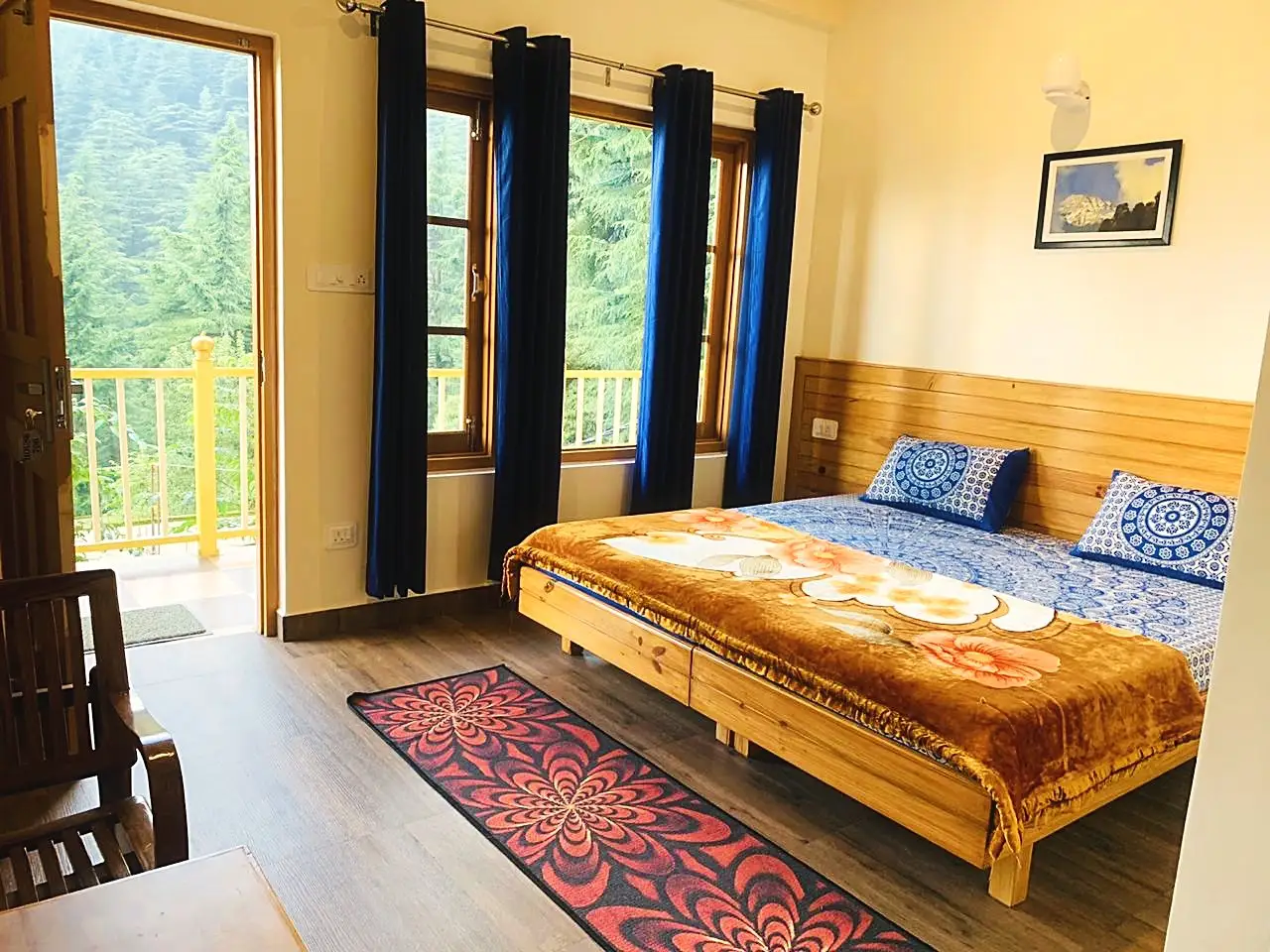

Dharamkot 07
Balcony room above the valley
- 49 Mbps wifi
- Max 2 people
- Power backup
- Balcony
₹25,000/month₹7,000 /week
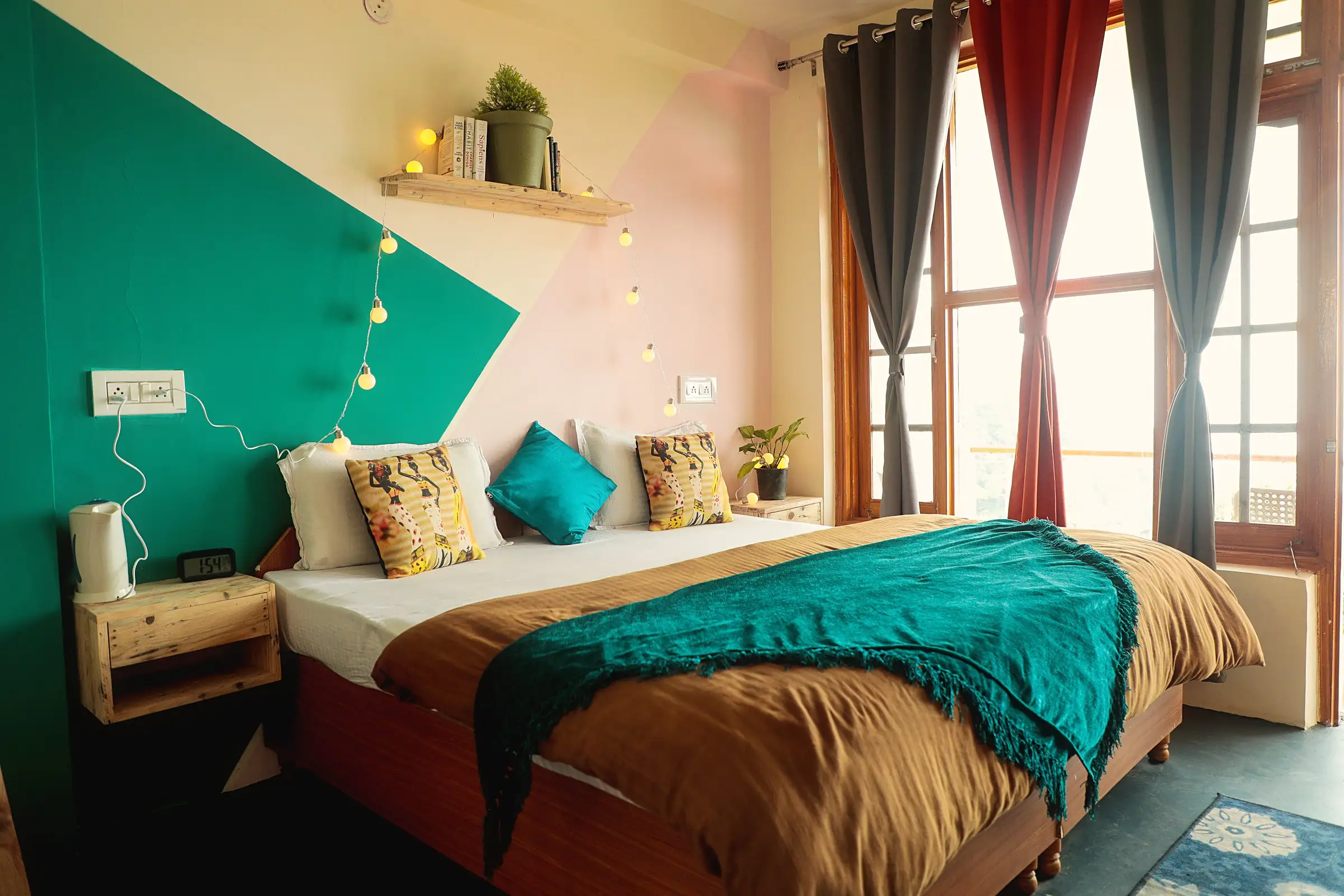

Dharamkot 01
Balcony room with ridge views
- 91 Mbps wifi
- Max 2 people
- Power backup
- Balcony
₹32,000/month₹9,000 /week
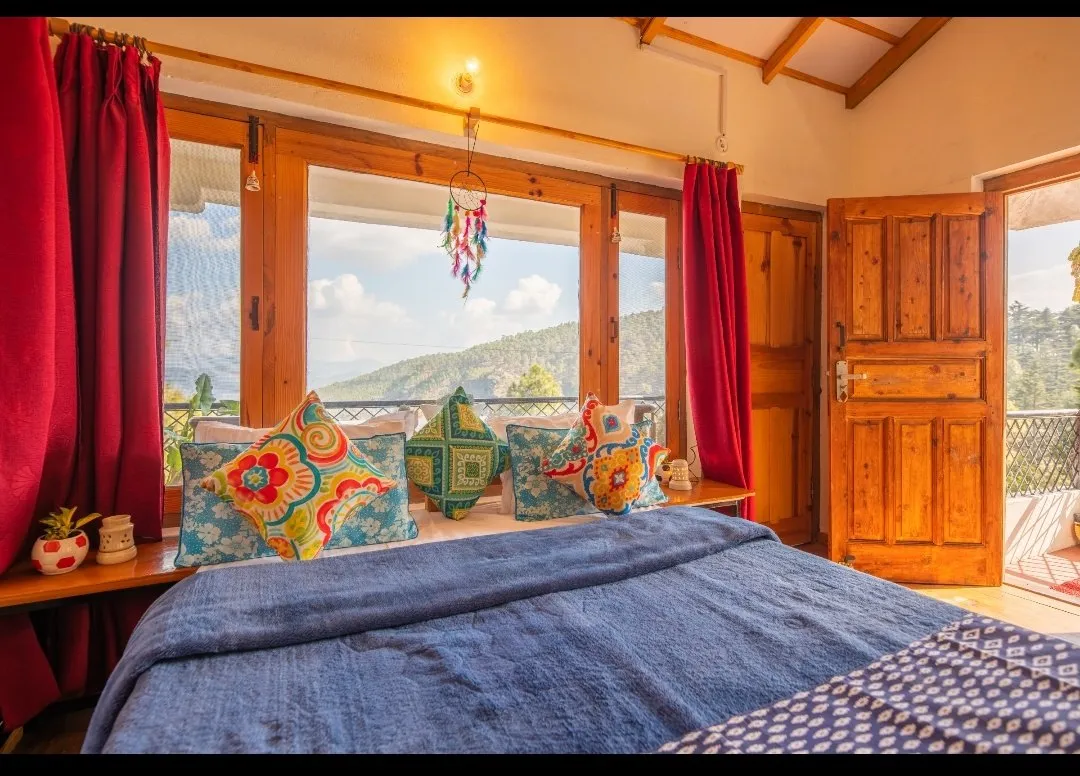

Almora 03
Corner room with a pine balcony, Kasar Devi
- 91 Mbps wifi
- Max 2 people
- Balcony
₹21,000/month₹6,000 /week
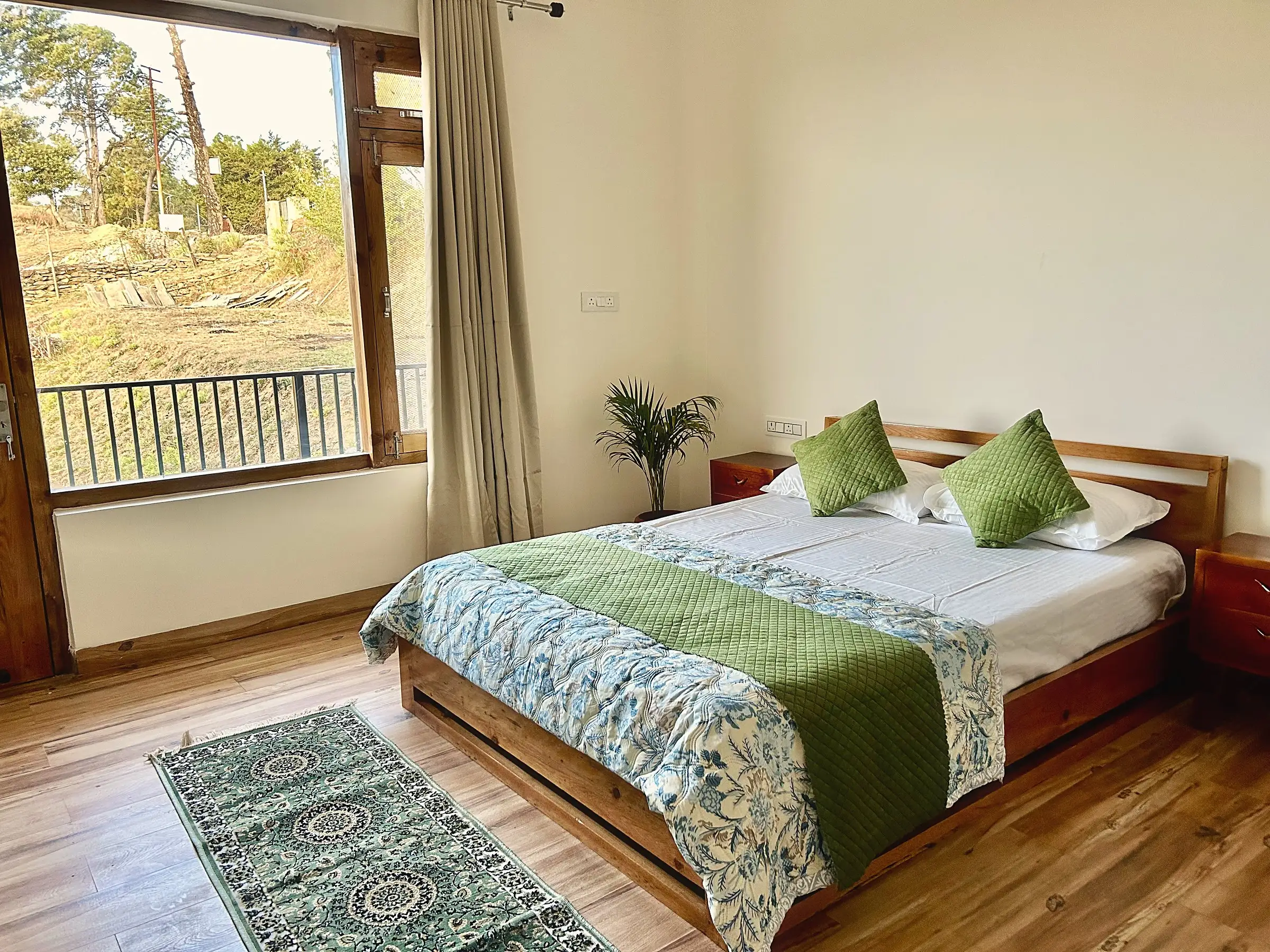

Almora 09
Desk room with a ridge-view balcony, Kasar Devi
- 73 Mbps wifi
- Max 2 people
- Work desk
- Balcony
₹23,000/month₹6,500 /week
Keep reading
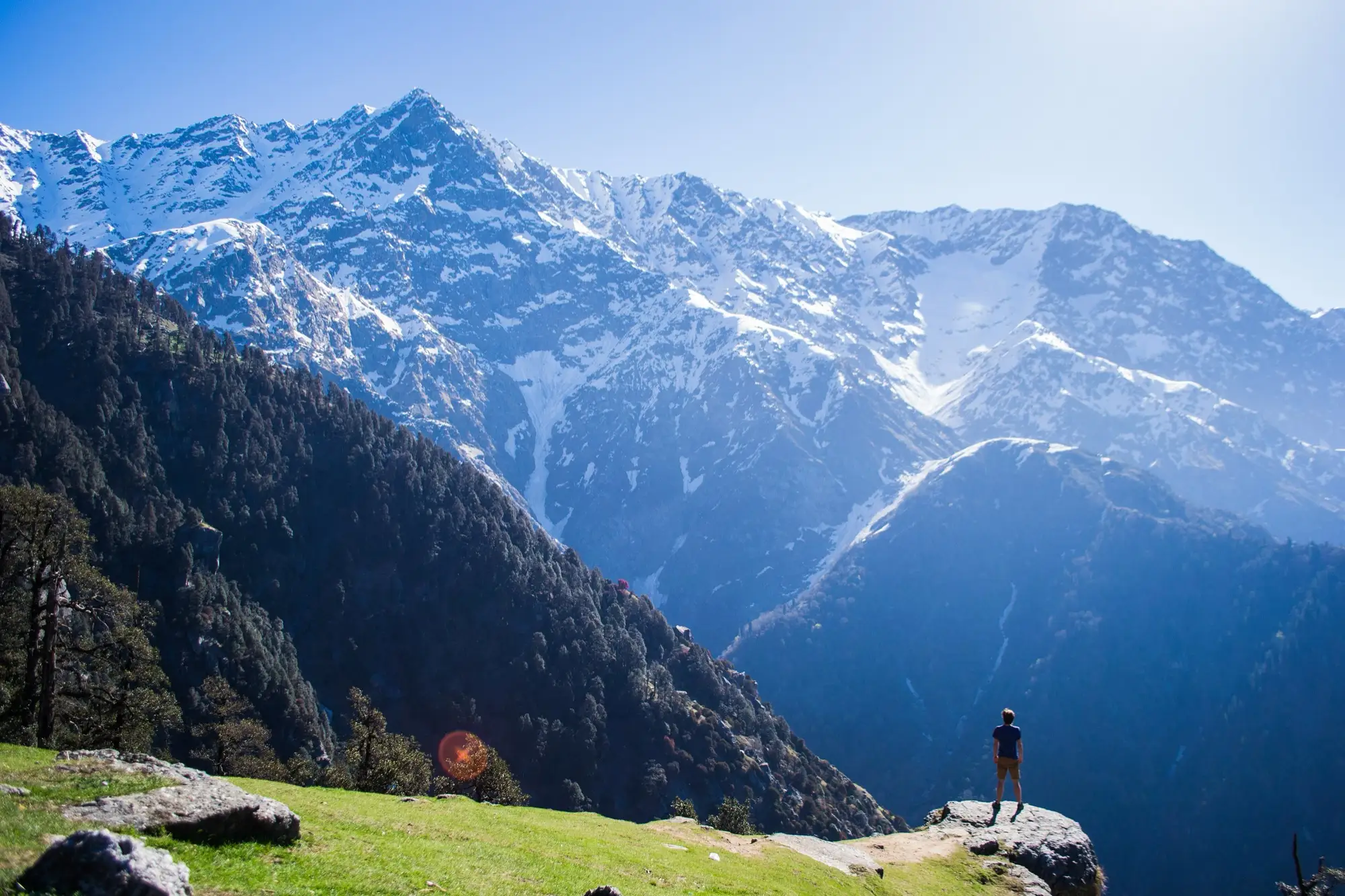 Workation · 13 min readWork From Hills: how weekly and monthly stays in the mountains workWhat working from the hills involves, what decides whether it works, what it costs and how booking a stay works.
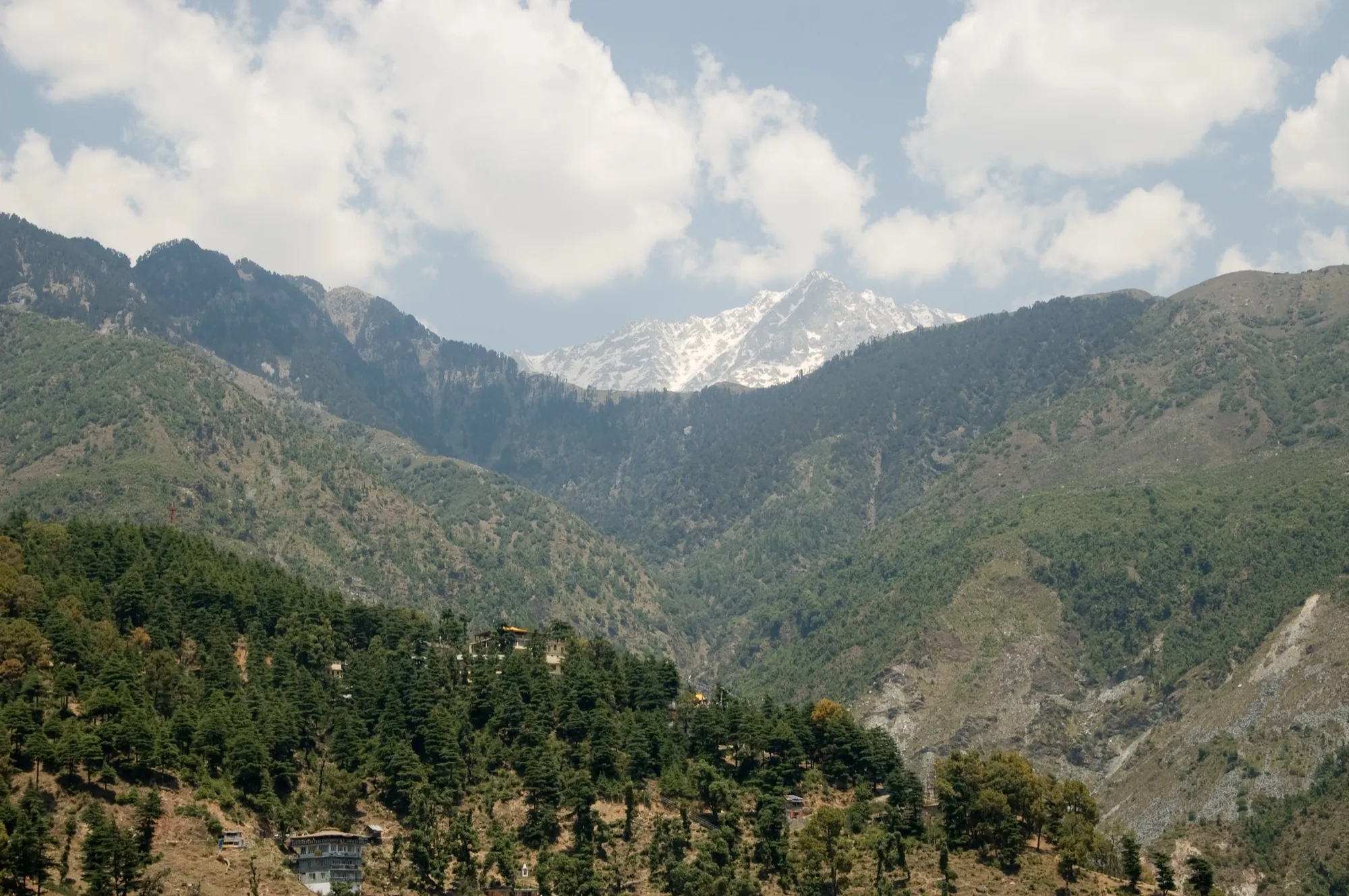 Workation · 16 min readWorkation in Himachal: the honest guide to towns, internet, costs and seasonsTen Himachal towns and villages compared for a week to a few months of remote work, with the monsoon and snow facts.
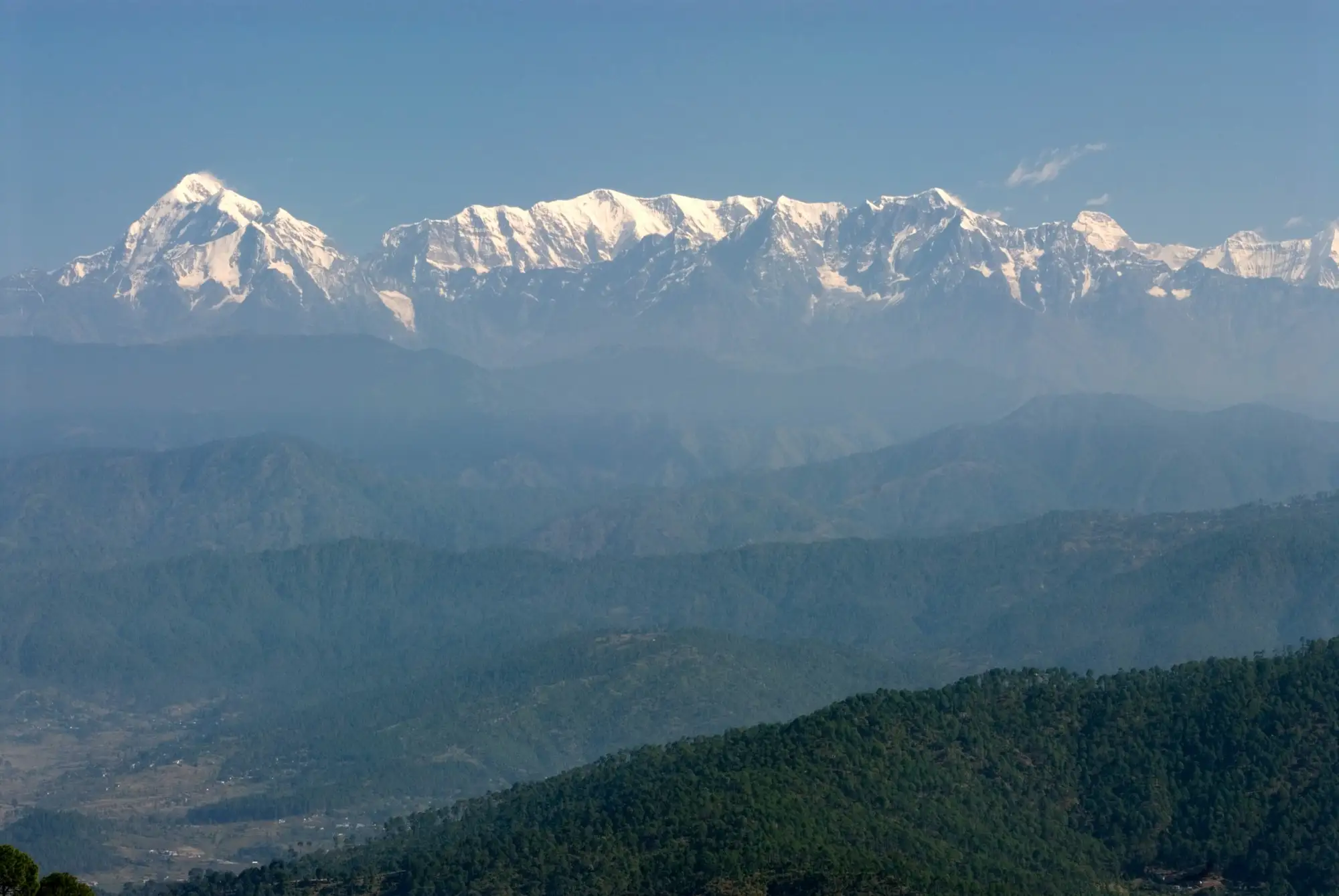 Workation · 15 min readWorkation in Uttarakhand: the towns that work for a week or a monthTen Uttarakhand towns compared for a working week or month: internet, cost, monsoon, power and the route from Delhi.
 Places · 17 min readHill stations near Delhi: 25 picks by drive timeHeight, road distance, drive time and best months for 25 hill towns, from a 4 hour drive to a two day one.